


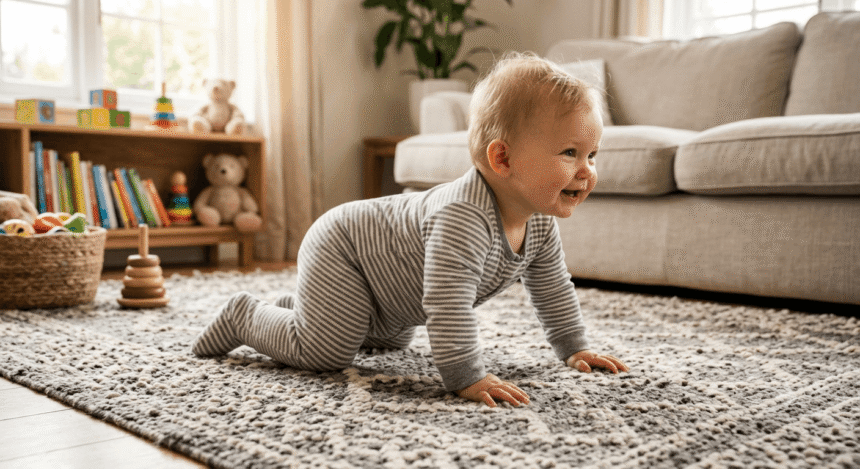
I still remember the evening my neighbor Ritu called me in a slight panic. Her son Aarav had just turned eight months old, and every other baby in her mom-group WhatsApp chat seemed to be crawling across living room floors in videos, chasing after cats and pulling socks off feet. Aarav, meanwhile, was perfectly happy sitting in one spot, playing with his toes. “Is something wrong with him?” she asked.
Nothing was wrong with Aarav. Four weeks later, he skipped the classic hands-and-knees crawl entirely and pulled himself straight up to standing on the coffee table instead. Ritu’s worry, though completely understandable, is one almost every parent goes through. Crawling looks like such a defined, obvious milestone from the outside — but the truth is far messier, far more interesting, and far more reassuring once you understand how it actually works.
This guide breaks down exactly how babies learn to crawl: the muscle-building stages that come before it, the many different “styles” of crawling that are all perfectly normal, the age range you can realistically expect, and what you can do at home to gently support the process — without pressuring your baby or comparing them to the next-door cousin.
Why Crawling Matters More Than It Looks
It’s tempting to think of crawling as just “the thing babies do before they walk.” In reality, crawling is doing a lot of quiet, invisible work.
When a baby moves on hands and knees, they’re building strength across almost every major muscle group at once — hands, wrists, arms, shoulders, core, hips, and legs. Pediatric physical therapists often describe it as one of the first true full-body workouts a baby ever gets, and it lays the physical groundwork for walking, running, and climbing later on.
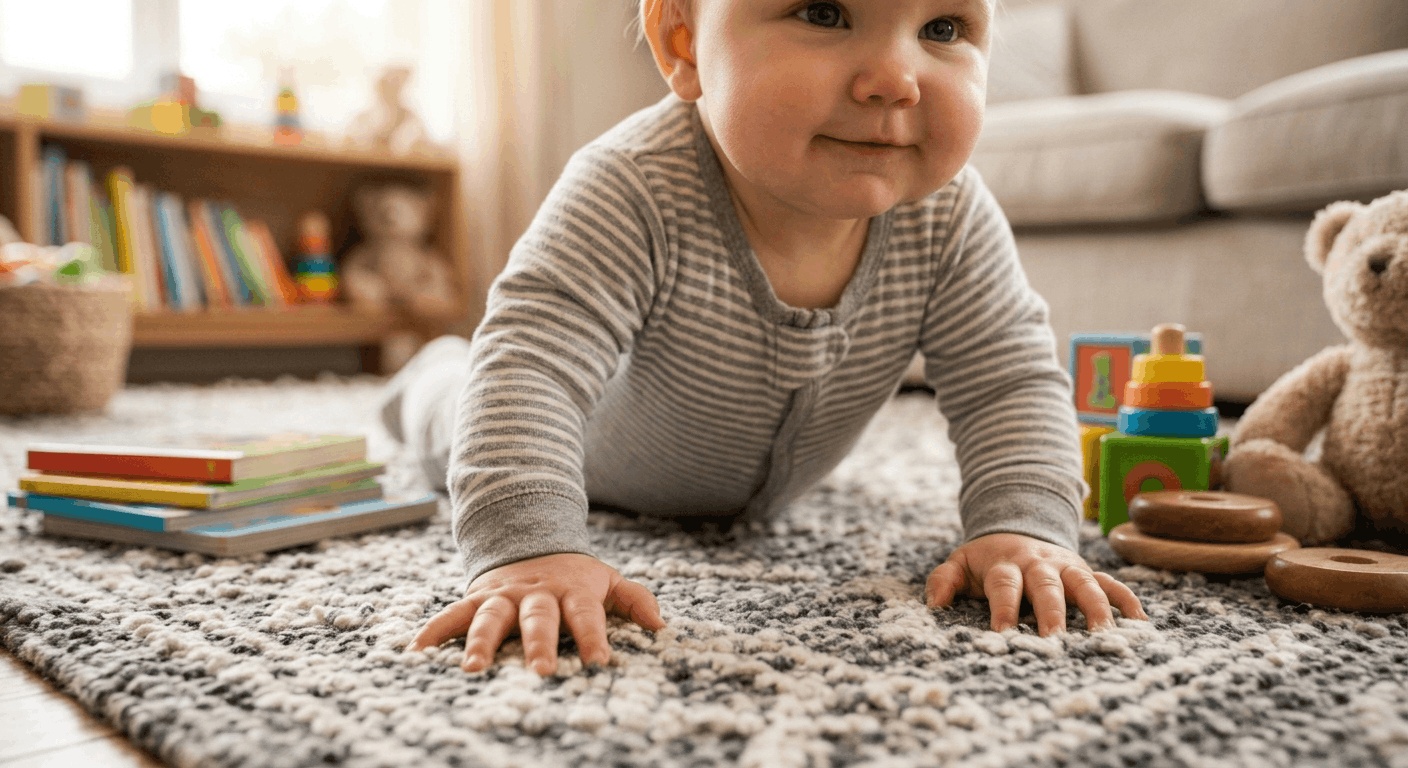
But the benefits go beyond muscle. Crawling requires a baby to coordinate the left and right sides of their body at the same time — reaching with one hand while pushing off with the opposite knee. This “cross-lateral” movement pattern is linked to how the two halves of the brain learn to communicate with each other, which later supports skills like reading, writing, and hand-eye coordination. Every time your baby reaches for a toy just out of grasp and drags themselves toward it, they’re also practicing problem-solving, spatial awareness, and persistence.
That said, crawling is not considered a mandatory checkpoint. In recent updates to developmental screening guidelines, health authorities have actually moved away from listing crawling as a strict milestone, because so many healthy babies skip it altogether and move directly to standing and walking. So while crawling is wonderfully useful, it isn’t a pass-or-fail test of your baby’s development.
Also Read : Baby Name Ideas
When Do Babies Start Crawling?
Most babies begin some form of crawling between 7 and 10 months old, though the completely normal range stretches from as early as 6 months to as late as 12 months or beyond. Roughly half of all babies are crawling in some form by around 8 months, but plenty of happy, healthy babies take longer — and about 1 in 10 babies skip crawling entirely, moving straight from sitting to pulling up and walking.
A simple way to think about it: crawling isn’t a single event that happens overnight. It’s the visible tip of a much longer process that starts almost from birth.
The Real Stages Behind Crawling
Long before your baby drags themselves across the rug for the first time, their body is quietly rehearsing the individual pieces of the movement. Here’s the typical progression, though your baby may move through it in their own order or skip pieces entirely.
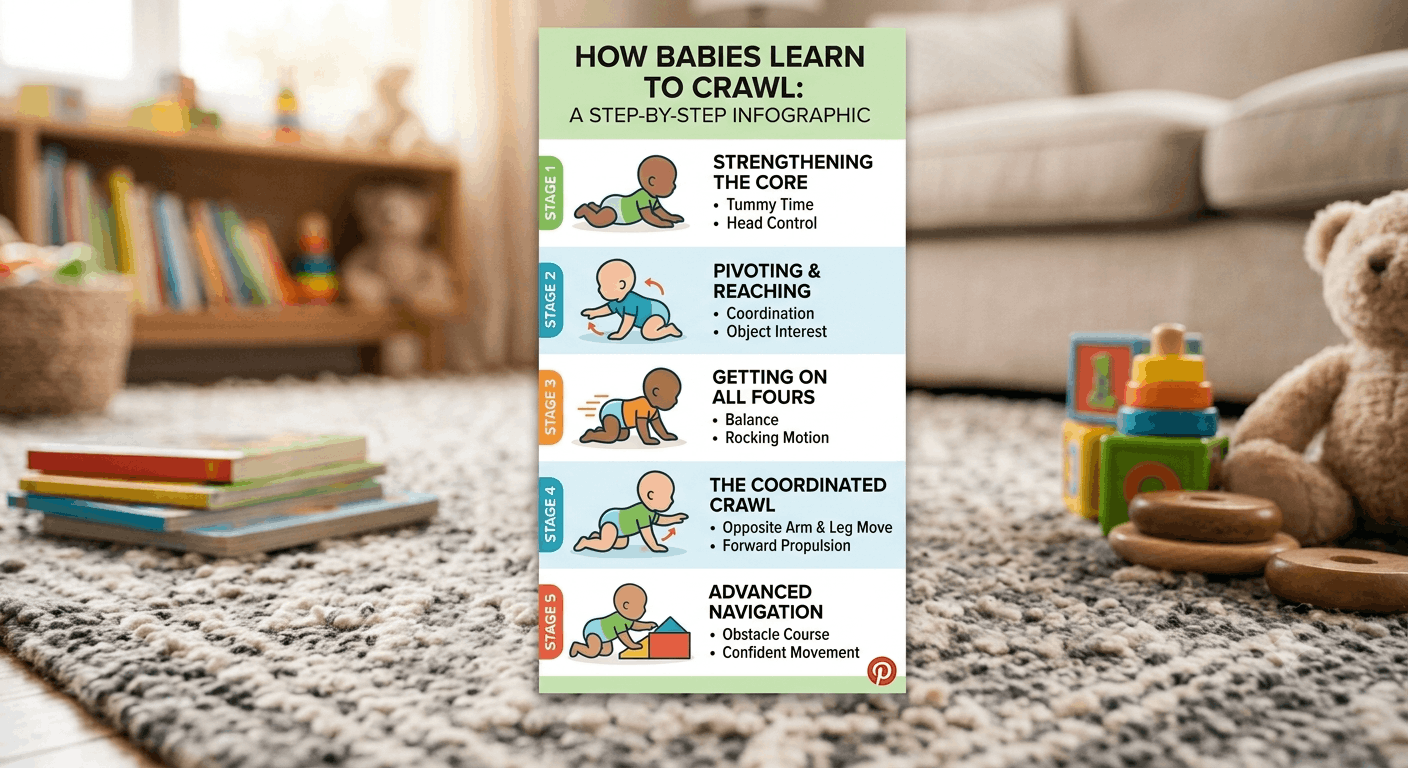
1. Tummy Time and Head Control (Newborn–3 Months)
It starts almost at birth. Interestingly, newborns are briefly born with a “crawling reflex” that helps them instinctively push toward the chest during skin-to-skin contact right after delivery — this reflex fades within the first couple of months, only to reappear later as intentional movement. From day one, short bursts of supervised tummy time build the neck and shoulder strength your baby will eventually need to lift their head and chest off the floor.
2. Rolling Over (4–6 Months)
Around this stage, babies typically learn to roll from tummy to back and back to tummy. This is their very first experience of moving their whole body through space on purpose, and it teaches an important skill called “weight shifting” — learning to lean your weight onto one side of the body while the other side moves freely, which is exactly what crawling requires later.
3. Sitting Independently (5–8 Months)
Sitting without support (even briefly, propped on their hands at first) strengthens the core and back muscles that keep a baby stable once they get up on all fours. Some babies sit before they show any interest in crawling; others crawl first and figure out sitting afterward. Both patterns are normal.
4. Rocking on Hands and Knees (6–9 Months)
This is often the first “aha” moment parents notice. Your baby gets up on all fours and rocks back and forth, sometimes for weeks, without actually going anywhere. It looks a little comical, but it’s an important rehearsal — the brain is learning how to balance weight on four points before it attempts to move any of them.
5. Creeping or Belly Crawling (7–9 Months)
Many babies “creep” before they truly crawl — dragging their belly along the floor using their arms, legs trailing behind. This commando-style movement, sometimes called the army crawl, often shows up before the classic hands-and-knees version and helps build the arm and shoulder strength needed for it.
6. Classic Crawling (7–10 Months)
Eventually, most babies figure out how to lift their belly off the ground and move using an alternating hand-and-opposite-knee pattern. This is the “classic crawl” most people picture, and it usually clicks fairly suddenly after weeks of rocking and creeping — one day your baby just goes for it.
7. Cruising and Pulling Up (9–12 Months)
Not long after crawling becomes confident, most babies start pulling themselves up onto furniture and cruising sideways while holding on. This is the bridge between crawling and independent walking.
Also Read: The Complete Guide to Pregnancy Due Date Calculator
Not Every Baby Crawls the Same Way — And That’s Completely Fine
One of the most reassuring things I wish more parents knew is that “crawling” doesn’t have one correct form. Pediatric sources describe several completely normal variations, and many babies will try more than one before settling on a favorite:
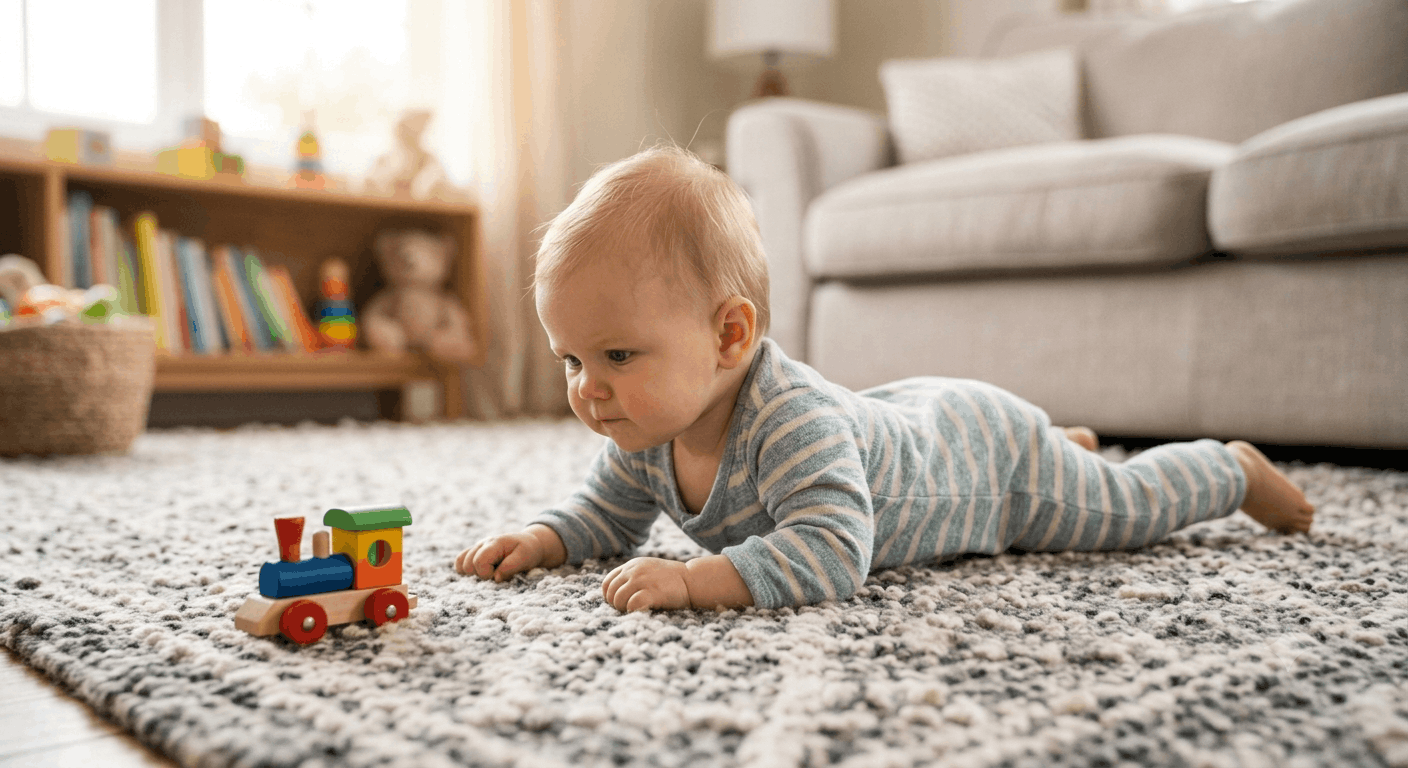
- Classic crawl: Moving on hands and knees, alternating one hand with the opposite knee, tummy lifted off the floor.
- Commando or belly crawl: Dragging the belly along the floor while pulling forward with the arms — often the very first “real” movement babies figure out.
- Bear crawl: Similar to the classic crawl, but with straight arms and legs instead of bent knees, so the baby looks like they’re walking on all fours like a little bear cub.
- Bottom scoot: Sitting upright and shuffling forward (or backward) using the arms and legs, without ever getting onto hands and knees at all. Some bottom-scooters become incredibly fast and skip traditional crawling completely.
- Crab crawl: Moving sideways or backward using the hands, with one leg bent and one extended — it looks unusual, but shows growing control over each side of the body independently.
- Rolling crawl: Simply rolling repeatedly to get from one spot to another. It’s less common, but it counts as independent mobility just as much as any other style.
A friend of mine swears her daughter invented her own hybrid style — half bottom scoot, half commando crawl — that she nicknamed “the caterpillar shuffle.” It looked nothing like a textbook crawl, but it got the job done, and within a month her daughter had transitioned into a completely typical hands-and-knees crawl. The takeaway: the goal is independent movement, not a specific technique.
Signs Your Baby Is Getting Ready to Crawl
Before the first real crawl happens, most babies show a cluster of readiness signs over several weeks:
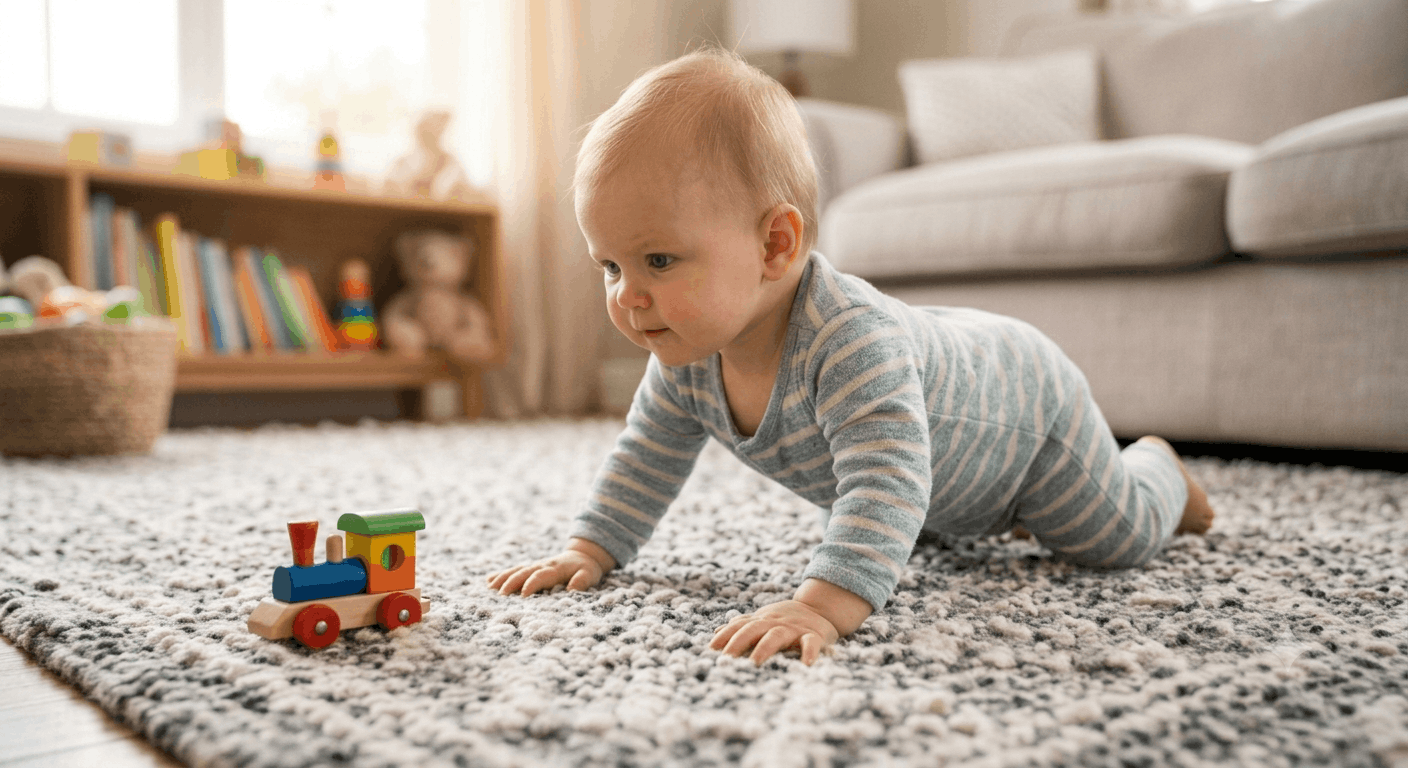
- Pushing up onto straight arms during tummy time, lifting the chest well off the floor
- Rocking back and forth on hands and knees
- Rolling confidently in both directions
- Sitting steadily without support
- Reaching for toys just out of arm’s length and getting frustrated when they can’t reach them
- Pivoting in a circle while sitting or lying on the belly, trying to face a toy
If you notice your baby doing several of these at once, crawling is often only a few weeks away.
How to Encourage Your Baby to Crawl (Without Forcing It)
You cannot — and shouldn’t try to — force a baby to crawl before their body is ready. But you absolutely can create an environment that makes it easier and more appealing for them to practice. Here’s what actually helps:
1. Prioritize daily tummy time. Start with just a few minutes, several times a day, from the newborn stage onward, and gradually build up as your baby gets stronger. Tummy time is the single biggest predictor of how prepared a baby’s body is for crawling.
2. Give plenty of floor time. Bouncers, swings, and carriers are wonderful tools, but a baby who spends most of their awake time in containers gets far less practice moving their own body against gravity. Aim for generous stretches of supervised, unrestricted floor play every day.
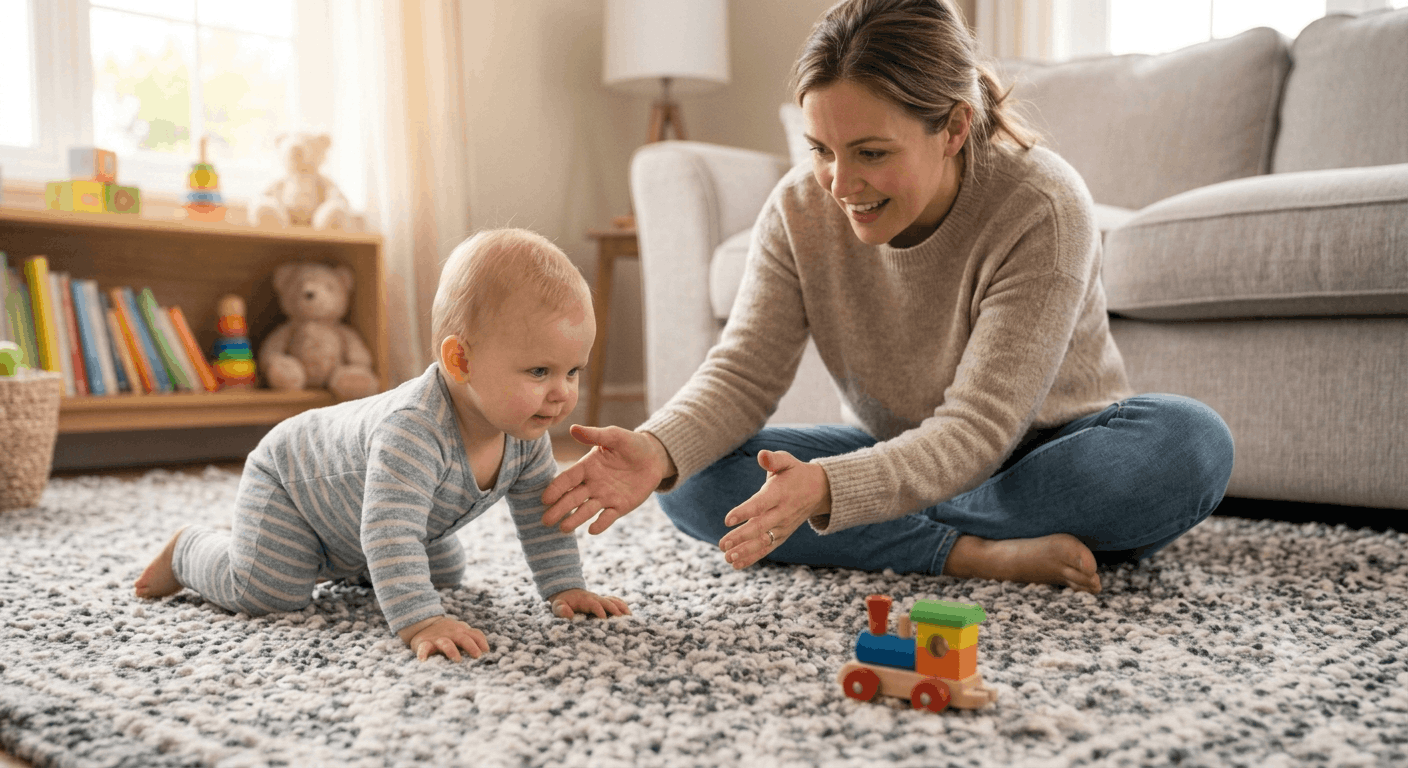
3. Put toys just out of reach. Placing a favorite toy a little farther away than your baby can comfortably grab gives them a reason to figure out forward movement on their own. Resist the urge to always slide it closer the moment they get frustrated — a little struggle is where the learning happens.
4. Get down on the floor with them. Babies are naturally motivated to move toward familiar faces. Sitting a short distance away and encouraging your baby to come to you turns practice into a game rather than a chore.
5. Create a safe, open space. A soft rug or padded mat in a clutter-free area gives your baby room to experiment with movement without the fear of bumping into furniture edges.
6. Try different textures and surfaces. Letting your baby experience carpet, grass (weather permitting), and smooth flooring under their hands and knees builds sensory feedback that supports coordination.
7. Celebrate every attempt, not just the “correct” one. Whether it’s a wobbly rock on all fours or an enthusiastic bottom scoot, cheering your baby on reinforces that movement is fun and rewarding.
Baby-Proofing Before the Big Move
Once crawling starts, it tends to progress fast — many parents describe going from the first tentative scoot to full-speed crawling in a matter of days. It’s worth baby-proofing a little before that happens rather than scrambling afterward:
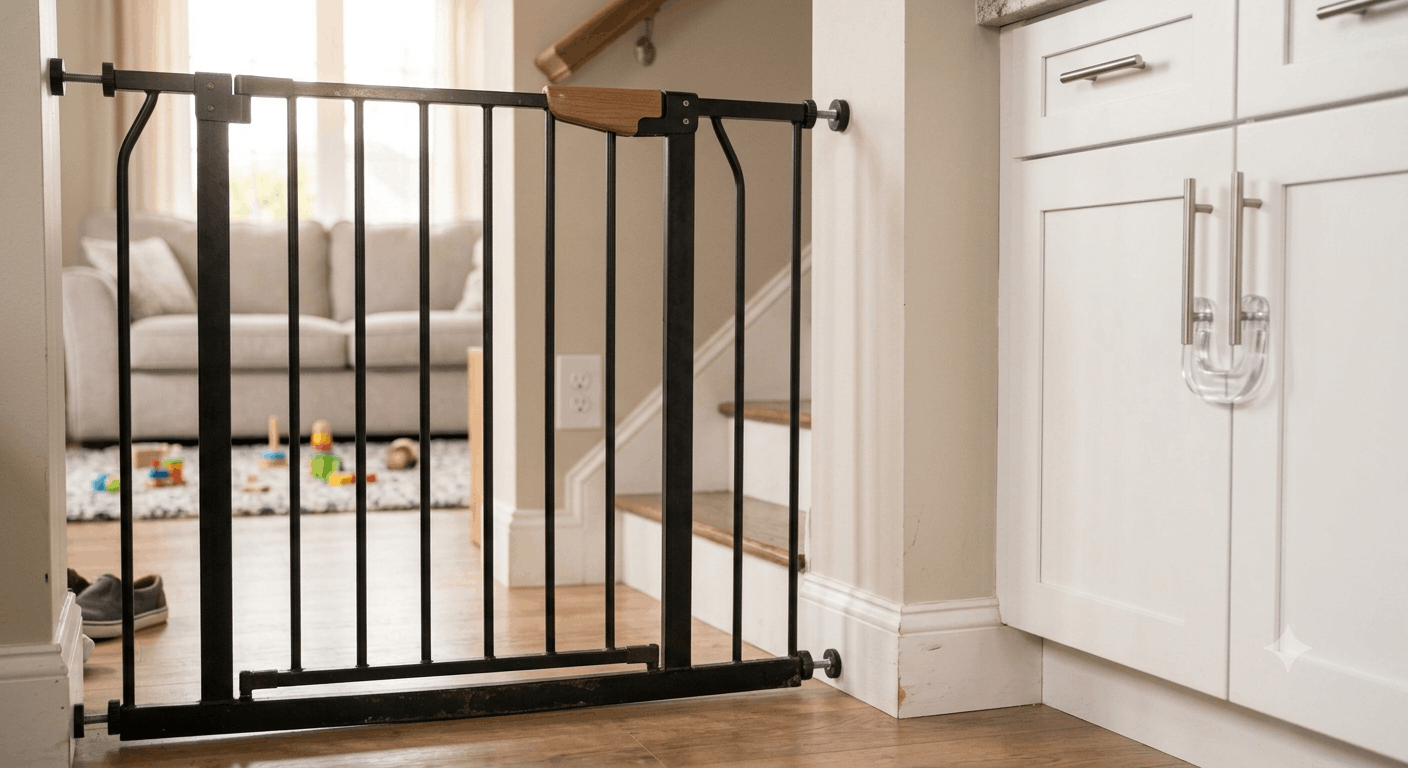
- Cover electrical outlets at floor level
- Install cabinet and drawer locks, especially near cleaning supplies
- Put safety gates at the top and bottom of staircases
- Clear the floor of small objects that could be choking hazards
- Anchor unstable furniture and televisions to the wall
- Move floor lamps, trailing cables, and breakable décor out of crawling range
A newly mobile baby also means every toy within reach ends up in their mouth within seconds, so it’s worth staying on top of toy hygiene once crawling begins — our complete guide to cleaning baby toys walks through exactly how often and how to do it safely.
What If My Baby Isn’t Crawling Yet?
This is the question that keeps parents up at night, and it’s worth answering honestly: most babies who “aren’t crawling yet” at 8, 9, or even 10 months are completely fine. Development isn’t a race, and the range of normal is wide.

That said, it’s worth mentioning to your pediatrician if, by around 9 to 10 months, your baby shows no interest in moving independently at all (in any style — including scooting or rolling), can’t bear weight on their legs, uses one side of the body noticeably more than the other, or has lost a skill they previously had. In most cases, a pediatrician will simply reassure you, but if there’s ever a genuine developmental concern, a pediatric physical therapy evaluation can help identify exactly what support your baby needs — and earlier support tends to make a bigger difference than waiting.
Remember Ritu’s son Aarav? He walked confidently by 13 months, never having done a single “classic” crawl. His pediatrician wasn’t concerned in the slightest — he’d simply built his strength and coordination through sitting, rolling, and pulling up instead. Every baby finds their own way of getting from A to B, and that’s exactly how it should be.
Frequently Asked Questions
Is it bad if my baby skips crawling completely? No. Research suggests a meaningful percentage of babies skip crawling entirely and move straight to standing and walking, with no long-term difference in development.
Can I make my baby crawl faster? You can’t rush the timeline, but tummy time, floor play, and a safe space to move all help your baby build the strength and confidence they need as soon as their body is ready.
Which crawling style is “correct”? None of them, exclusively. Classic, commando, bear, bottom-scoot, crab, and rolling crawls are all considered normal, healthy forms of independent movement.
How long does the crawling phase usually last? Most babies crawl for a few months before transitioning into cruising and eventually walking, typically somewhere between 12 and 15 months, though this also varies widely.
The Bottom Line
Learning to crawl isn’t really a single skill — it’s the finish line of months of quiet, determined practice: tummy time, rolling, sitting, rocking, and reaching. Some babies tackle it in a tidy, textbook order. Others invent their own delightfully weird version, like the “caterpillar shuffle,” and get there just as surely. Whichever path your baby takes, the best thing you can do is give them safe space, plenty of encouragement, and a little patience — the rest, almost always, takes care of itself.
Keep Reading
- How to Clean Baby Toys: Complete Safety Guide for Parents
- Baby Name Ideas — if you’re still deciding on a name for your little crawler-to-be