


Think about the last time a stranger held a door for you, let you merge into traffic, or simply said “no rush.” You probably forgot the moment within minutes, but it likely made your day a little lighter. That is common courtesy at work: small, free, ordinary acts that make shared life easier. Small acts of kindness are a big part of real mom life, where patience and consideration get tested daily.
The rules of courtesy change little from one place to another, but they are often overlooked in a busy, screen-heavy world. This guide explains what common courtesy really means, why it matters, and 25 habits you can start using today at home, at work, in public, and online.
What Is Common Courtesy?
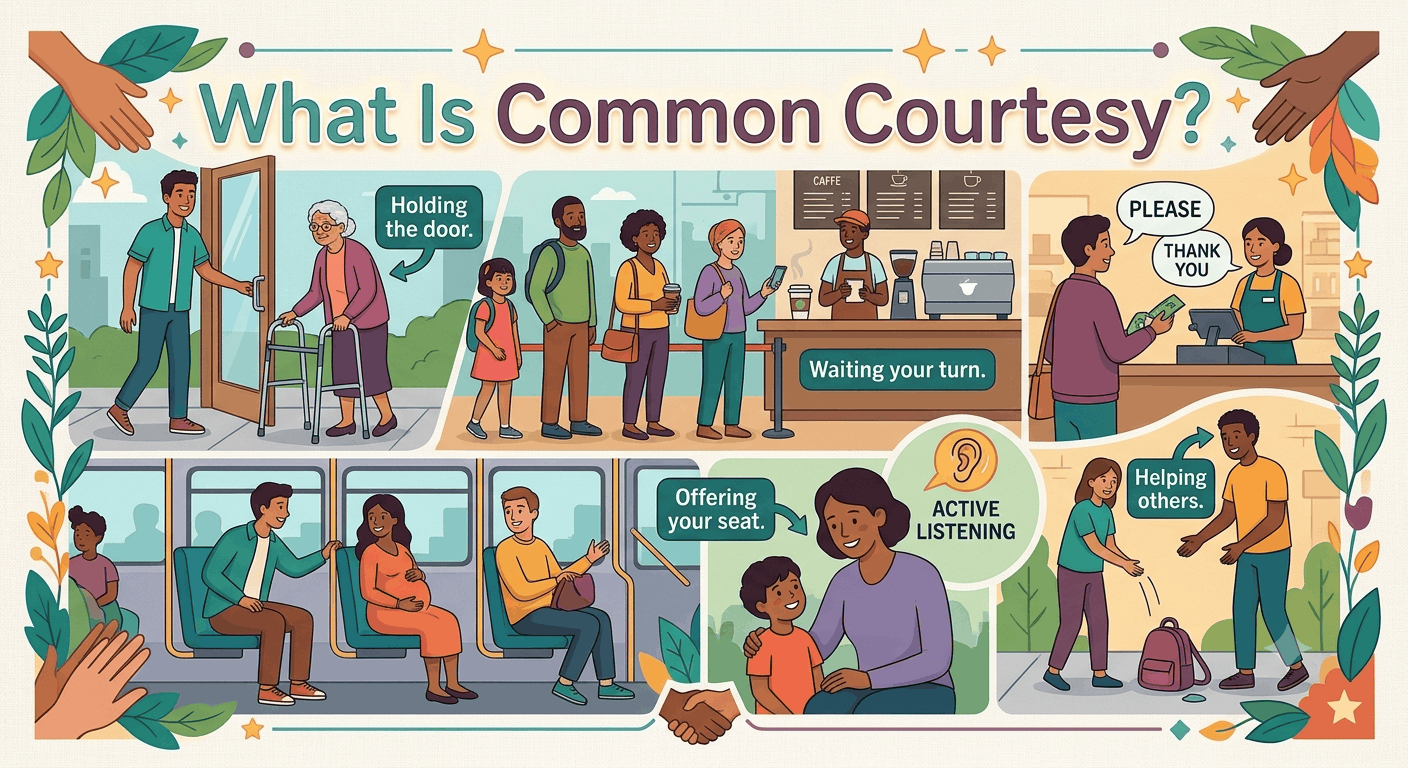
Common courtesy is the basic level of consideration people are expected to show one another, whether they are friends or strangers. It means treating others the way you would want to be treated, with attention to their time, space, feelings, and effort.
No one needs to teach you a rulebook to practice it. It rests on one idea: other people matter as much as you do.
Common Courtesy vs. Etiquette
The two terms overlap, but they are not identical.
- Etiquette is a set of formal customs, such as which fork to use or how to word a wedding invitation. These rules vary by culture and occasion.
- Common courtesy is the universal layer underneath: saying thank you, waiting your turn, and not interrupting. It applies in every situation.
You can forget the fork rules and still be a perfectly courteous person.
Why Common Courtesy Matters
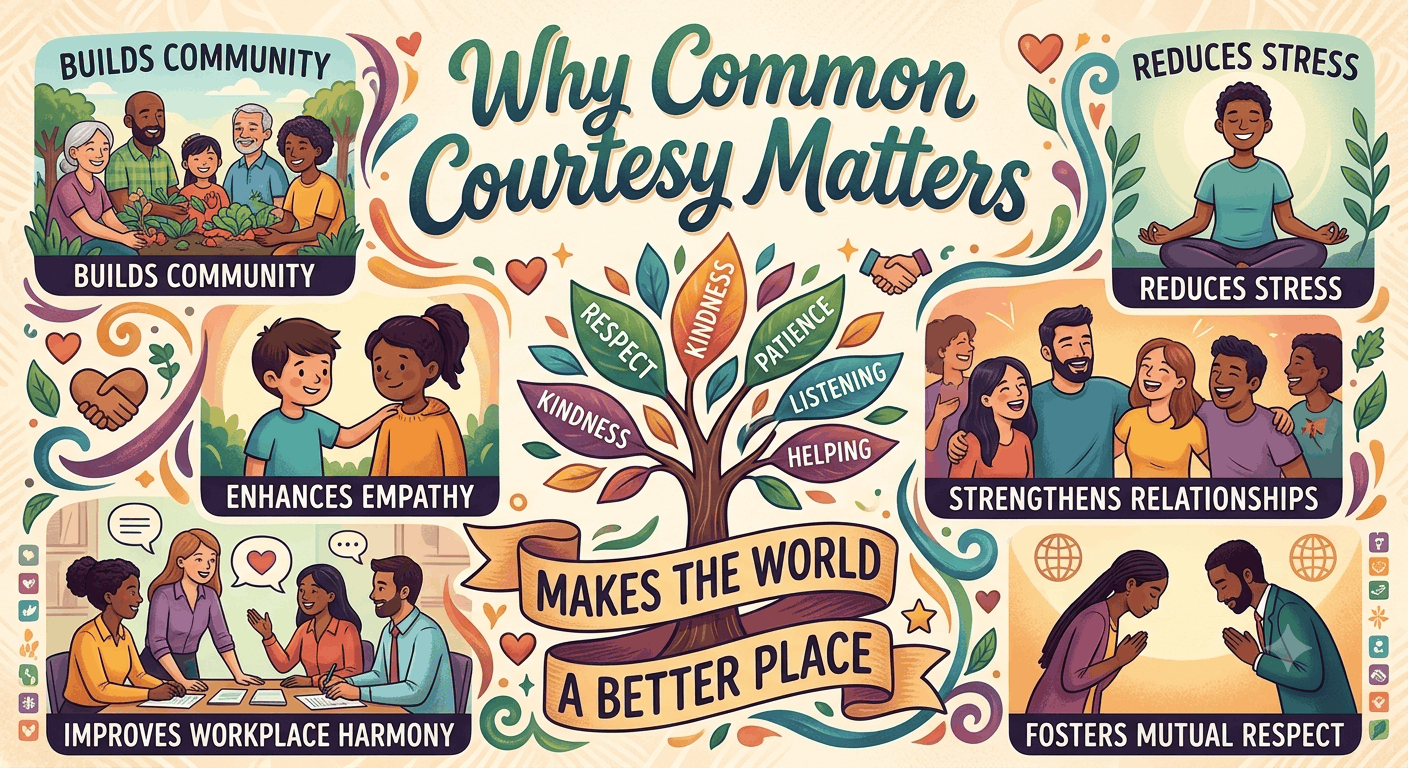
Courtesy might look minor, but its effects add up.
- It builds trust. People who treat others respectfully are easier to rely on and to work with.
- It reduces conflict. A calm “excuse me” prevents many arguments before they start.
- It improves your reputation. Employers, teammates, and neighbors remember how you made them feel.
- It benefits your wellbeing. Kindness and gratitude are linked to lower stress and stronger relationships.
- It spreads. Polite behavior is contagious, and one considerate act often inspires another.
Common Courtesy at Home
The people closest to you often get the least courtesy, because familiarity makes us lazy. Try these:
1. Say “please” and “thank you” to family. Gratitude doesn’t expire just because you live together.
2. Respect shared space. Wash your own dishes, return what you borrow, and keep noise down when others are sleeping or working.
3. Knock before entering. A closed door is a request for privacy, even in a household of loved ones.
4. Listen without a screen in your hand. Putting the phone down for a conversation says, “You have my attention.”
5. Share the workload. Courtesy at home means noticing what needs doing and pitching in without being asked.
Home is where courtesy gets tested most, and it shapes how family relationships feel day to day.
Common Courtesy at Work
Professional courtesy keeps teams productive and workplaces pleasant.
6. Be on time. Showing up late to a meeting tells everyone their time is worth less than yours. If you are delayed, send a quick message.
7. Let colleagues finish speaking. Interrupting signals that your idea matters more than theirs. Wait for a pause, then respond.
8. Give credit openly. If a coworker contributed to your success, say so publicly.
9. Reply to messages and emails. You don’t need a long answer. A short acknowledgment shows respect.
10. Keep shared spaces clean. That includes the office kitchen, meeting rooms, and printers.
11. Mute yourself when you’re not talking. Virtual meetings added a new courtesy: managing your own background noise.
Common Courtesy in Public Places
Public spaces work only when strangers cooperate.
12. Hold the door. If someone is right behind you, take one extra second.
13. Wait your turn. Whether you’re in a queue at the bank or at a busy counter, don’t cut in line.
14. Keep your voice down. Phone calls, speakerphones, and loud videos in public can intrude on everyone nearby.
15. Give up your seat. Offer it to an elderly person, a pregnant woman, someone injured, or anyone who clearly needs it more.
16. Be kind to service staff. Greet them, speak politely, and be patient. Cashiers, drivers, servers, and cleaners are doing a job, not serving your ego.
17. Clean up after yourself and your pets. Leave a space in the condition you would like to find it.
18. Stay patient on the road. Let others merge, signal your turns, and don’t use the horn out of frustration.
Common Courtesy Online
Digital life needs its own set of good manners. Many people say things on a screen that they would never say face to face.
19. Pause before you post or reply. If a message was written in anger, wait before sending it.
20. Don’t share private information. Ask permission before posting someone’s photo or personal details.
21. Disagree respectfully. You can challenge an idea without insulting the person.
22. Respect people’s time in group chats. Avoid sending dozens of messages, and don’t tag people unless it’s necessary.
Everyday Habits That Show Respect for Others
These last few apply anywhere:
23. Learn and use people’s names correctly. If you are unsure how to pronounce one, ask. It shows you care.
24. Apologize sincerely. A real “I’m sorry” without excuses repairs more than people expect.
25. Treat everyone the same. Be as polite to a janitor as you are to a CEO. How you treat people who can do nothing for you says a lot about your character.
How to Teach Common Courtesy to Children
Kids learn manners mostly by watching adults, not by hearing lectures. For more stage-by-stage guidance, browse our parenting advice for every age or read the complete guide to real motherhood.
- Model the behavior. If you say thank you and wait your turn, they will copy you.
- Explain the reason. Instead of “Say sorry!”, try “How do you think she felt when that happened?”
- Practice through role-play. Short games about greeting people or asking politely make habits stick.
- Praise specific acts. “I loved how you held the door for that lady” works better than “good job.”
- Be patient. Courtesy is learned over years, not days.
Is Common Courtesy Declining?
Many people feel that politeness is fading, and surveys on civility regularly find that people think public manners have worsened. Part of the gap comes from what each age group considers polite. This year-by-year guide to the different generations explains why grandparents, parents, and teens often see manners differently.
Whatever the truth is, the fix is simple and personal: your own behavior is the only part you control. Practicing courtesy yourself is more effective than complaining about others.
Frequently Asked Questions About Common Courtesy
What is an example of common courtesy?
Holding a door for the person behind you, saying “thank you,” letting someone finish speaking, and giving up your seat to someone in need are all everyday examples.
Why is common courtesy important?
It builds trust, prevents unnecessary conflict, improves relationships, and makes shared spaces more pleasant for everyone.
What is the difference between common courtesy and manners?
Manners are often tied to specific customs and cultures. Common courtesy is the basic, universal consideration for others that applies in any situation.
Is common courtesy the same everywhere?
The principle is, but the details vary. A gesture considered polite in one country may be neutral or rude in another, so it helps to observe and ask when you are somewhere new.
Can common courtesy be learned?
Yes. It is a skill built through awareness and repetition. Anyone can improve by paying more attention to how their actions affect others.
Final Thoughts
Common courtesy doesn’t need money, status, or special training. It needs only attention and a little effort. Pick two or three habits from this list and practice them for a week. You’ll likely notice smoother interactions, warmer responses, and a sense that your own day goes better too.
If you want more practical, honest ideas for family life, explore the Famousparenting Momlife blog.
Related Posts You May Like
- Famousparenting Momlife: The Complete Guide to Real Motherhood, Every Stage
- A Year-By-Year Guide to the Different Generations (And What Makes Each One Tick)
- Mom Life Famousparenting: Real Moms, Real Days, Real Wins
- 7 Small Evening Rituals That Will Help You Switch Off and Enjoy Your Time at Home