


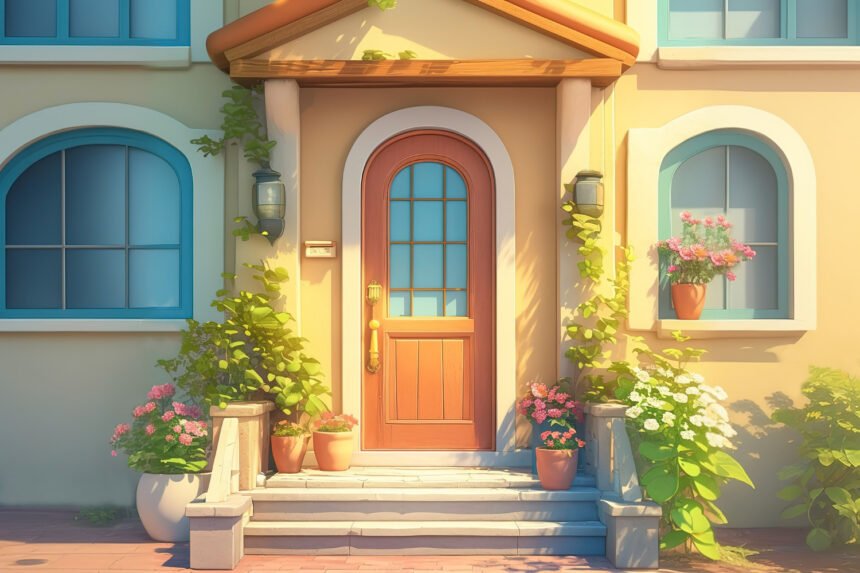
I still remember the first time my toddler nearly took a tumble down our front steps chasing after a stray cat. My heart dropped into my stomach, and right then I realized our entryway — the one I’d spent weeks decorating with a cute bench and a jute rug — was basically a hazard course dressed up in Pinterest clothing. That afternoon I sat down with a coffee (cold by the time I finished it, as always) and rethought the whole space from scratch.
If you’ve got little ones running around, your front door area probably gets more foot traffic — and more chaos — than almost any other spot in the house. Shoes fly off here, bags get dropped, dogs bark at the mail carrier, and kids dash in and out a dozen times a day. It deserves more thought than most of us give it.
This guide walks through everything I learned (some the hard way) about building an entryway that’s genuinely safe for kids but still looks like something you’d want guests to see.
Why the Front Door Area Deserves Extra Attention
Most parents baby-proof the kitchen, the bathroom, maybe the stairs inside the house. The front entry often gets forgotten because it feels like a “passing through” space rather than somewhere kids actually spend time. But that’s exactly the problem.
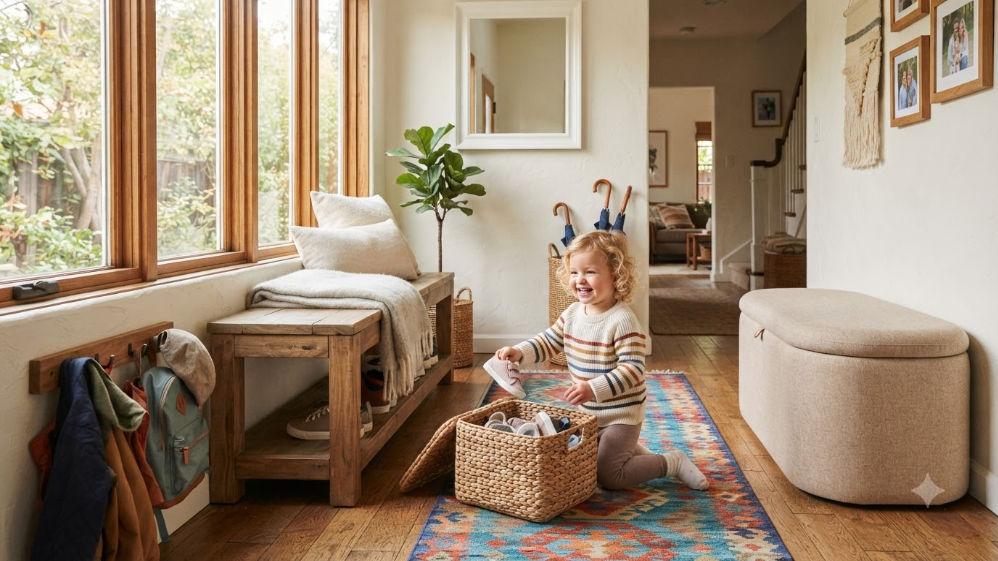
Kids linger at the front door more than you’d think — waiting for a sibling to tie their shoes, peeking through the glass at a delivery truck, or trying to unlock the door themselves because they’ve seen you do it a hundred times. It’s also the one door in the house that connects directly to the street, driveways, and whatever’s parked outside. That combination of curiosity and proximity to real danger is worth taking seriously.
There’s also a design angle here that a lot of blogs skip over. A well-planned entryway isn’t just functional — it sets the tone for your whole home the second someone steps in. Parents searching for a kid-friendly mudroom organization idea are usually trying to solve two problems at once: keep the mess contained and keep the kids safe. The good news is you really can do both without one canceling out the other.
Start With Safety: The Non-Negotiables
Before you pick a single throw pillow or paint swatch, get the safety basics locked down. Everything else builds on top of this.
Door Hardware and Locks
Kids are shockingly good at figuring out how to unlock a front door, usually right around the age you least expect it. A simple deadbolt placed higher up, out of easy reach, solves a lot of problems overnight. If you’ve got a smart lock, use the child-lock or “away mode” feature if it has one — it stops little fingers from turning a keypad into a game.
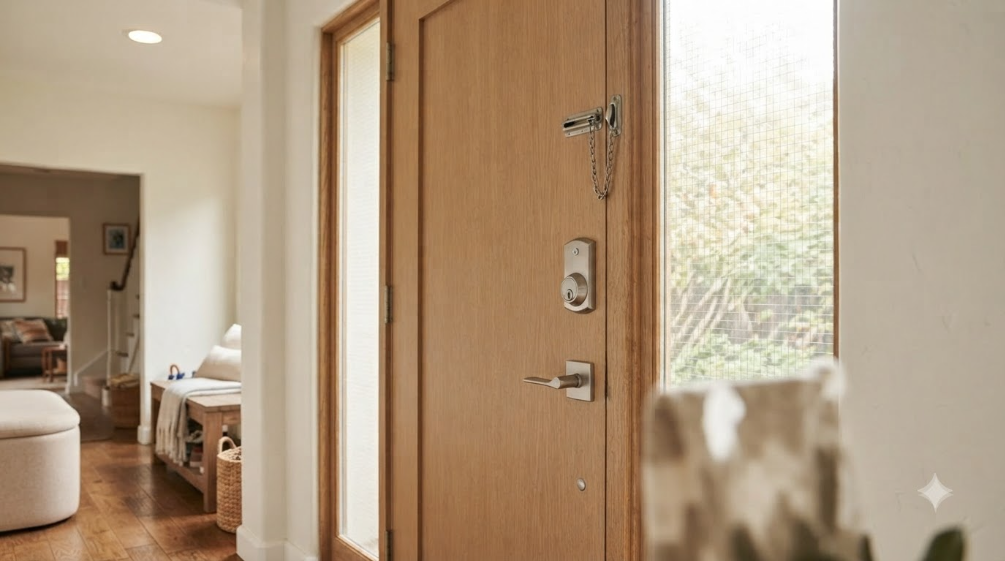
I’d also recommend a door chain or secondary lock as a backup, not because the deadbolt fails, but because toddlers are persistent and will eventually get tall enough or clever enough to work one lock out.
Glass Panels and Sidelights
If your front door has glass panels or sidelight windows, check whether it’s tempered safety glass. Older homes especially might still have regular glass that shatters into sharp shards rather than the small, blunt pieces safety glass breaks into. A cheap window film can add a layer of protection if replacing the glass isn’t in the budget right now.
Steps, Thresholds, and Uneven Flooring
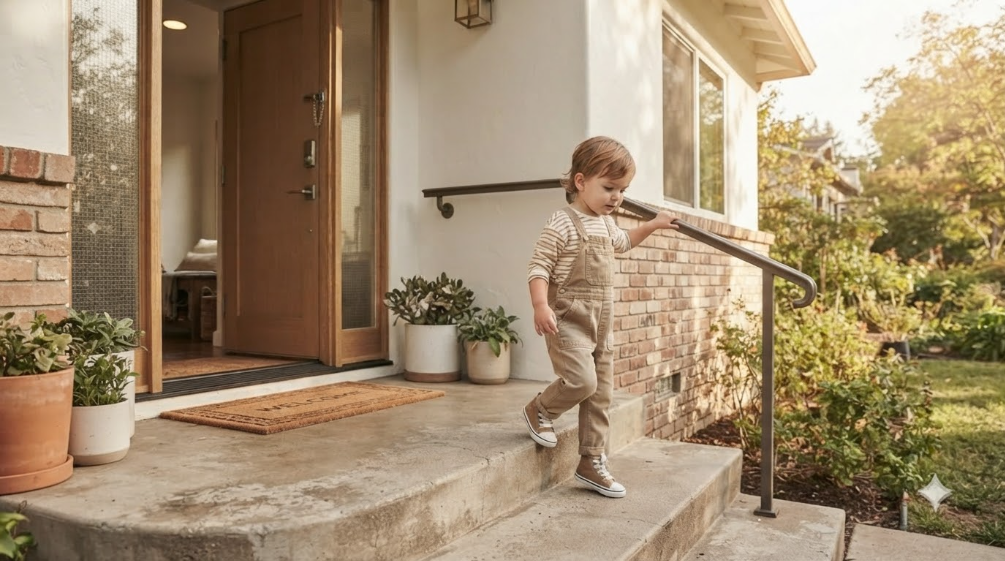
This is the one that got me. Front steps, raised thresholds, and that little lip where indoor flooring meets the porch tile are classic tripping spots. A rubber threshold ramp or textured no-slip strip costs less than a nice candle and prevents a genuine fall. If you’ve got more than two steps, a low handrail kids can actually reach makes a real difference — most railings are built for adult height and completely useless to a four-year-old.
Keeping the Path Clear
It sounds obvious, but clutter near the door is one of the most common causes of trips and falls with young kids running around. Shoes left in the walking path, umbrella stands with pointy tips, decorative branches in tall vases — all of it needs a designated spot that isn’t directly in the walkway. Parents dealing with this daily often end up searching for a childproofing front entryway idea simply because the clutter problem and the safety problem are really the same thing wearing different hats.
Furniture Choices That Actually Hold Up
Once the safety fundamentals are sorted, furniture is where you start shaping the room’s personality. But with kids around, not every piece that looks good in a catalog photo survives real life.
Benches are the workhorse of any entryway. Look for ones with rounded corners rather than sharp edges — a kid moving fast around a bench corner is a bruise waiting to happen. Storage benches with a soft-close lid mechanism are worth the extra cost; the number of pinched fingers I’ve prevented since switching to one is honestly impressive.
Console tables, if you want one, should be sturdy enough that a kid grabbing it to steady themselves won’t tip it over. Anchor anything tall or top-heavy to the wall — yes, even in the entryway, not just the living room. A front porch safety tip for young children that rarely gets mentioned is anchoring furniture near the door, even though it’s just as important there as anywhere else in the house.
Mirrors are lovely at the front door but should be shatterproof acrylic or securely wall-mounted rather than leaning against a wall, which is a trend I see a lot in design magazines and honestly wouldn’t recommend with kids underfoot.
Rugs need a non-slip backing. A stylish rug that slides on tile the second someone runs across it isn’t stylish, it’s a hazard with a nice pattern on it.
Making It Stylish Without Sacrificing Function
Here’s the part that actually gets me excited, because safe doesn’t have to mean boring. Some of my favorite entryways I’ve seen belong to parents who leaned into color and personality instead of avoiding it out of fear something might break.
Go for durable materials that photograph well and survive daily abuse — think painted wood over delicate finishes, woven baskets over glass containers, washable paint on the walls (satin or semi-gloss finishes wipe clean far easier than matte). A gallery wall of framed art hung slightly higher than usual keeps it both decorative and out of grabbing range.
Lighting matters more than people realize. A warm, well-lit entry feels welcoming and also helps everyone — kids included — see where they’re stepping. Wall sconces mounted higher up avoid the cord-dangling issue you get with floor lamps, which toddlers treat like a personal tripwire.
If you’re aiming for a certain aesthetic, whether that’s coastal, farmhouse, or moody and modern, you can absolutely keep it while still following the safety rules above. I’ve noticed a lot of parents searching for a stylish entryway design for families with kids assume they’ll have to pick a “kid version” that looks watered down. That hasn’t been my experience at all — the safest pieces are often the ones that look the most intentional anyway.
Organizing for Little Hands
A front door area that actually works for kids needs to be organized at their height, not just yours. This was a genuine mindset shift for me — I kept putting hooks and bins where they looked good rather than where a three-year-old could actually reach them.
- Install a lower row of coat hooks specifically for kids, roughly 24 to 30 inches off the ground depending on their age
- Use open bins or baskets for shoes instead of closed cabinets — kids are far more likely to actually put shoes away if they don’t have to fuss with a door or drawer
- Keep a small step stool nearby so kids can reach slightly higher shelves or hooks without climbing on furniture
- Label bins with pictures for kids too young to read, which cuts down on the “where does this go” questions dramatically
An entryway storage solution for kids shoes and coats doesn’t need to be Pinterest-perfect. It needs to be usable by the actual humans who’ll use it every single day, and that’s a very different design brief.
Seasonal and Weather Considerations
Depending on where you live, your front door area has to handle mud, snow, rain, or blistering heat at different points in the year. A washable, low-pile mat just inside and outside the door catches most of the mess before it spreads through the house. In wetter climates, a boot tray saves your floors and stops slippery puddles from forming right where kids are running through.
If your entry gets direct sun for part of the day, keep in mind that dark flooring or metal hardware can get uncomfortably hot for bare little feet in summer. It’s a small detail, but one that’s easy to miss until a hot afternoon makes it obvious.
Common Mistakes I See Parents Make
A few patterns come up again and again when I talk to other parents about their entryways:
Overcrowding the space with too much furniture, which ironically makes it less safe because there’s less room to move without bumping into something.
Choosing decor purely for looks — like heavy glass vases or sharp-edged metal sculptures — without thinking through what happens if a running kid collides with it.
Skipping the outdoor side of the door entirely. Parents focus so much on the inside that porch railings, loose steps, or unsecured planters right outside get ignored, even though kids spend plenty of time out there too.
Forgetting to childproof as kids grow. What worked for a crawling baby doesn’t necessarily work for a curious five-year-old who’s suddenly tall enough to reach the deadbolt or strong enough to pull a bench over.
A Simple Weekend Makeover Plan
If this all feels like a lot at once, here’s roughly how I’d tackle it over a weekend without burning out or overspending.
Day one, focus entirely on safety: check the door lock height, inspect glass panels, add a non-slip mat or threshold strip, and anchor any furniture that could tip. This is the part that actually protects your kids, so don’t skip ahead to the fun stuff yet.
Day two, handle the organizing and styling. Add the kid-height hooks, swap in a durable rug, hang a mirror securely, and bring in whatever decor makes the space feel like yours — a plant, some art, a nice light fixture. By the end of the second day you’ll have a space that’s both safer and genuinely nicer to walk into every day.
Final Thoughts
Your front door area is one of those spaces that quietly shapes daily life more than it gets credit for. It’s the last thing your kids see leaving for school and the first thing they see coming home. Getting it right — safe first, stylish second, but honestly both at once if you plan it well — makes mornings smoother and gives you one less thing to worry about.
If you want more real, tested ideas for building a home that works for your family instead of against it, check out more parenting and home tips at Famous Parenting Mom Life.