

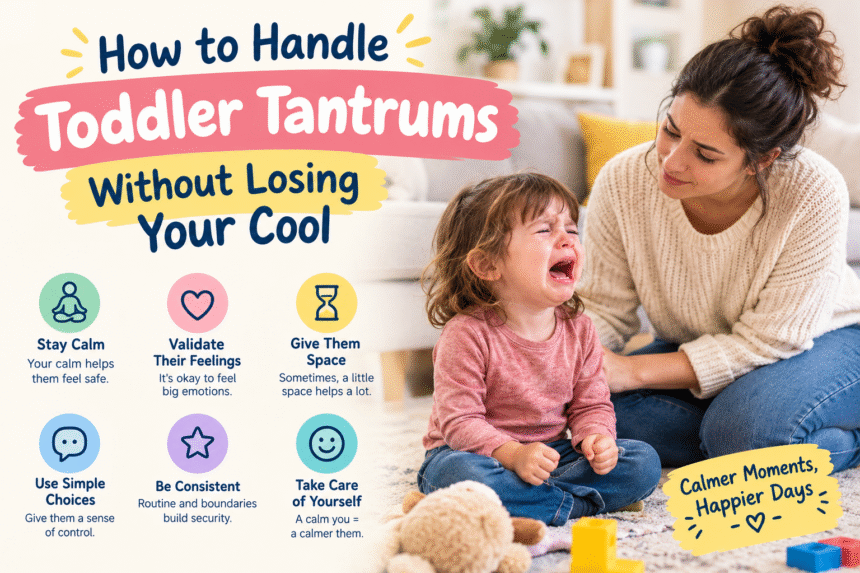
It is 5:40 p.m. Dinner is half made and you are running on fumes. Your two-year-old has just discovered that her banana broke in half, and in her mind this is a tragedy. Within seconds she is flat on the kitchen floor, screaming. If you have ever stood there wondering how to handle toddler tantrums without raising your own voice, you are in very good company.
Toddler tantrums are one of the most common and most draining parts of early parenting. They show up in grocery stores, at family dinners and at the worst possible moments. They can make even the calmest parent feel like they are failing. But a tantrum does not mean something is wrong with your child, and it does not mean you are doing a bad job.
In this guide you will learn why tantrums happen and how to handle toddler tantrums in the moment. You will also see how to deal with toddler tantrums before they start, what to do in public, and how to keep your own temper steady. If you want more real-life support from other moms, browse our Mom Life section for honest stories and tips.
The short version of how to handle toddler tantrums: keep your child safe, stay calm yourself, name the feeling in a few simple words, hold your boundary kindly, and reconnect once the storm passes. The rest of this article explains each step.
Why Toddler Tantrums Happen
To respond well, it helps to understand what is going on inside a small child’s head. A toddler is not trying to ruin your day. Their brain is simply not finished yet.
The part of the brain responsible for self-control, planning and calming down develops slowly, well into adulthood. A toddler has only the beginnings of it. Meanwhile, the emotional part of the brain works at full speed. So a toddler can feel enormous anger or disappointment but has almost no built-in brakes.

Language is the second piece. Most two-year-olds understand far more than they can say. When they cannot explain “I wanted the blue cup, and you gave me the green one, and I’m also tired,” the feeling has to go somewhere. It comes out as screaming, kicking, throwing or collapsing.
Toddlers are also in the middle of a major developmental shift. They want independence. They want to do things themselves, make choices and say “no.” But they still depend on you for almost everything. That gap between “I want to” and “I can” is a perfect recipe for frustration.
Common triggers behind toddler tantrums
Most meltdowns have a cause, even if it is not obvious at first. Look for patterns like these:
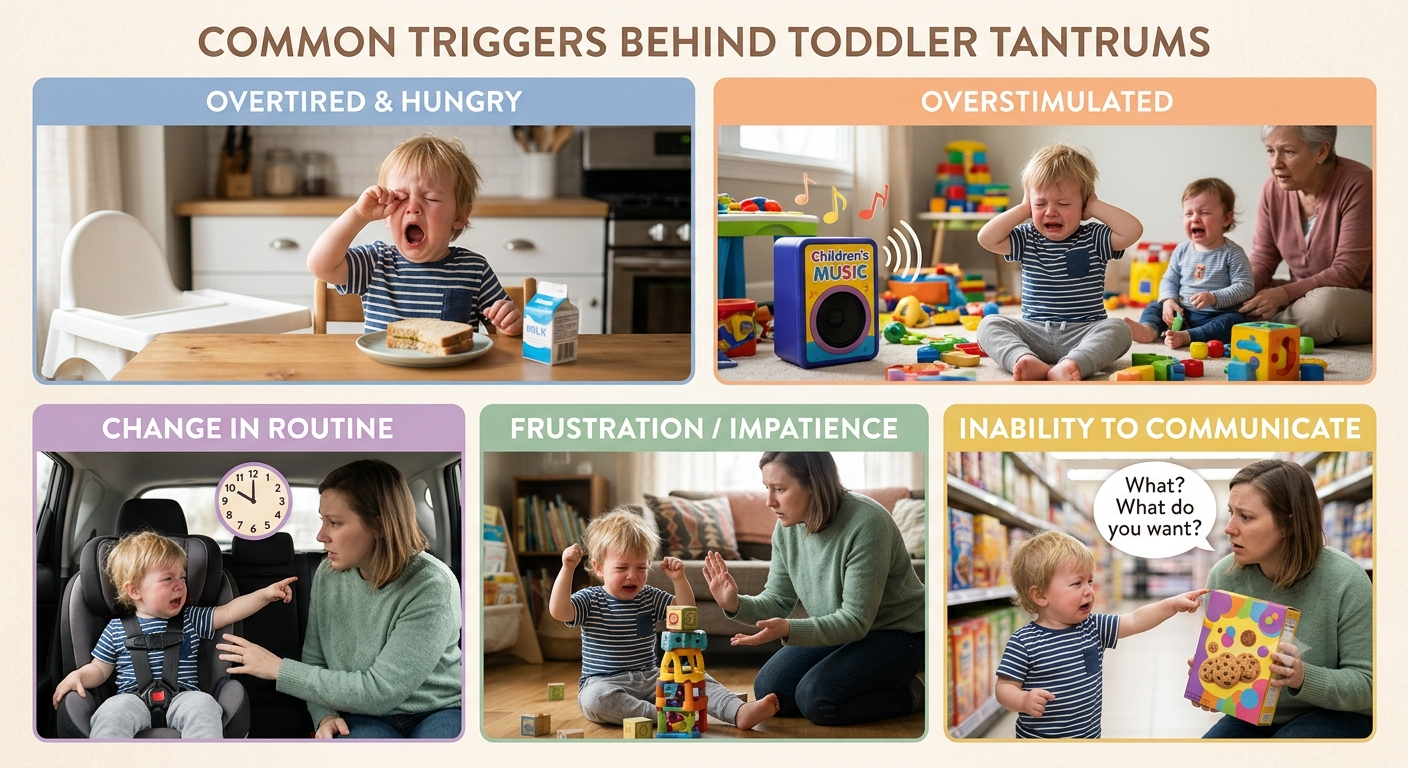
- Hunger or tiredness. Low energy shortens a toddler’s fuse dramatically.
- Overstimulation. Noisy stores, crowded parties and screens can overload a small nervous system.
- Frustration. A puzzle piece will not fit, or a shoe will not go on, and the feeling spills over.
- Being told “no.” Limits are healthy, but they still feel unfair to a two-year-old.
- Transitions. Leaving the park or turning off a favorite show can feel like a loss.
- Need for attention. Sometimes a tantrum is a clumsy way of saying, “Please notice me.”
Once you can predict your child’s top two or three triggers, many outbursts become easier to prevent.
Is it normal? Yes
Tantrums are a standard part of development. They usually start around 12 to 18 months, peak between ages two and three, and fade as children learn more words and gain more self-control. Many children have far fewer outbursts by age four or five. Knowing this can take away a lot of the shame and worry that parents carry.
How to Handle Toddler Tantrums in the Moment: A 7-Step Plan
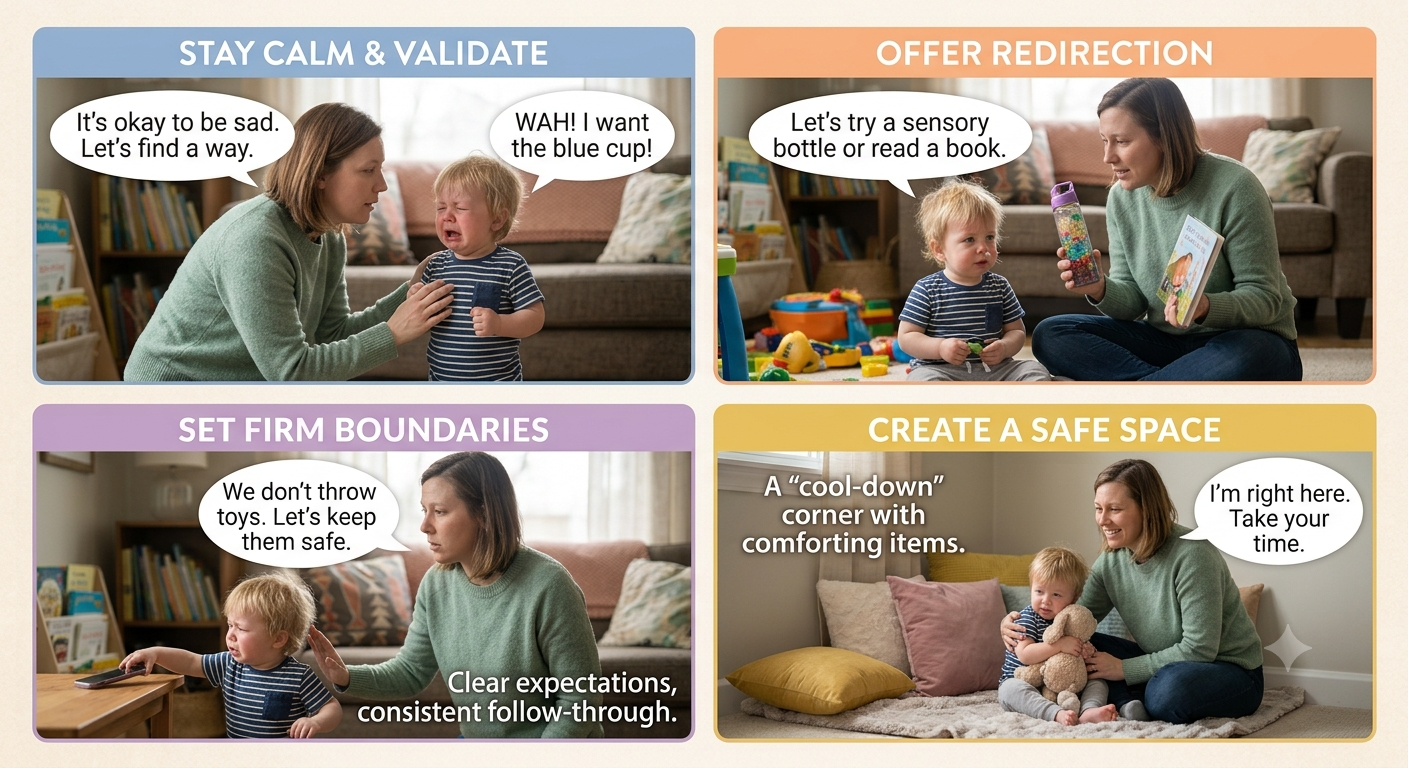
When the screaming has already started, you do not need a perfect parenting speech. You need a simple routine you can follow even when you are exhausted. Here is a step-by-step approach you can use anywhere.
Step 1: Pause and breathe before you react
Your toddler borrows your calm. Before you say a word, take one slow breath in and a longer one out. Drop your shoulders and unclench your jaw. This tiny pause keeps you from reacting out of frustration, and it shows your child what self-control looks like.
Step 2: Make sure everyone is safe
Check the surroundings. Move your child away from stairs, hot surfaces, sharp corners or traffic. If your toddler is hitting or throwing things, gently move the objects, or hold their hands if you must, and say, “I won’t let you hit.” Safety always comes first.
Step 3: Get low and keep your voice soft
Crouch down to your child’s level. Lower your voice and slow your words. A quiet, steady tone is much more calming than a loud one. If your toddler is too upset to be near you, stay close but give a little space.
Step 4: Name the feeling in a few words
Toddlers cannot talk themselves out of a meltdown, but they can feel understood. Use short, simple phrases such as:
- “You’re so mad. You wanted the red cup.”
- “You’re sad because we have to leave the park.”
- “That was frustrating. The block keeps falling.”
Naming the emotion tells your child that big feelings are safe to have. Over time it also gives them the vocabulary they are missing right now.
Step 5: Hold the limit without a lecture
During a tantrum, your toddler cannot reason, so long explanations will not land. State your boundary in one calm sentence: “I’m not buying candy today.” Then stay kind and firm. If you give in to stop the noise, your child learns that tantrums work. That makes the next one more likely.
Step 6: Offer comfort, not a reward
Some children want a hug during a meltdown. Others need space until the wave passes. Offer a hug or sit nearby, and let your child choose. Comfort is not the same as giving in. You can say, “I’m right here when you’re ready,” without changing the answer.
Step 7: Reconnect once things calm down
Once your toddler is calm, offer a cuddle and a very short chat. “You were really upset. That’s okay. Next time, you can say ‘help me.'” This is where the real learning happens. A calm toddler can absorb a tiny lesson. A screaming toddler cannot.
That is really the whole formula for how to handle toddler tantrums: safety, calm, empathy, a firm limit and a gentle reconnection. It will not stop every outburst, but it will make each one shorter and less stressful.
What about ignoring the tantrum?
Many parents ask whether they should ignore a tantrum completely. Ignoring the behavior, such as screaming for a toy, while staying nearby and safe can work well when your child is testing a limit. But a toddler who is truly overwhelmed needs your presence. So stay close, stay calm and do not reward the demand.
How to Deal With Toddler Tantrums Before They Start
The easiest tantrum to handle is the one that never happens. If you want to know how to deal with toddler tantrums for the long term, prevention matters as much as your reaction. These habits make a real difference.
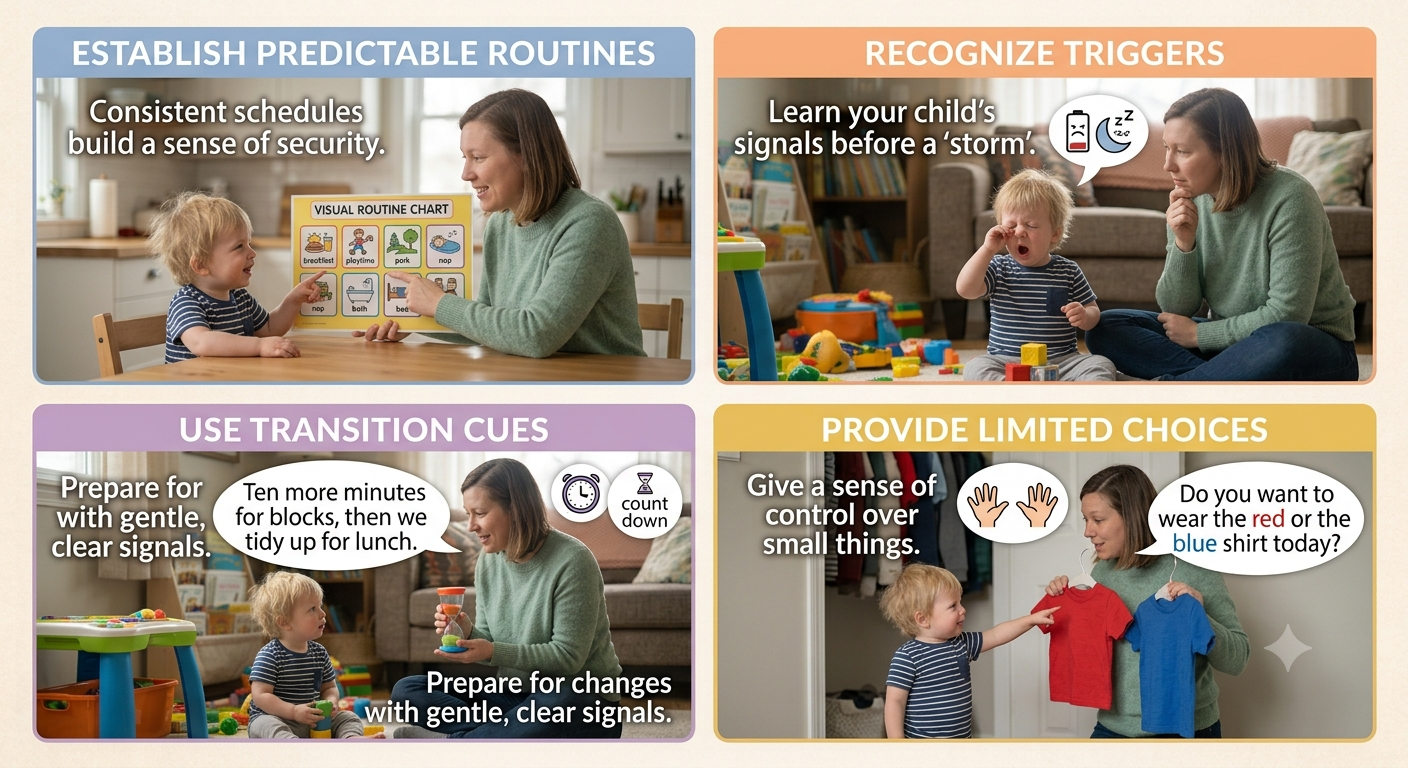
Protect sleep, food and routine. Regular meals, snacks and naps keep your child’s mood steadier. A hungry or overtired toddler is a tantrum waiting to happen. Try scheduling errands right after a nap and a snack, not right before.
Offer small, safe choices. Toddlers crave control. “Do you want the dinosaur cup or the star cup?” gives your child power without giving up your boundaries. Two options is plenty. Too many choices overwhelm them.
Give a heads-up before transitions. Sudden changes feel unfair to a small child. Try, “Five more minutes at the park, and then we go.” A visual timer, a song or a “last turn on the slide” ritual helps your toddler prepare.
Pick your battles. Not every “no” needs to be a “no.” If your child wants to wear rain boots on a sunny day and no one is harmed, let it go. Save your firm limits for safety, health and kindness.
Teach feeling words early. Read picture books about emotions and talk about your own. “I feel frustrated, so I’m taking a deep breath” shows your child what to do with big feelings. Children learn far more from what they see than from what they are told.
Create a calm-down corner. A small cozy spot with a soft blanket, a stuffed animal and a few picture books gives your toddler somewhere to reset. Introduce it during calm moments, not as a punishment. If you are redesigning your space anyway, these cozy, toddler-proof home decor ideas can help you build a home that survives chaos and feels peaceful.
Catch the good moments. Notice when your toddler handles disappointment well. “You were sad, and you used your words. That was hard, and you did it!” Specific praise encourages the behavior you want to see more of.
Fill their attention cup. Ten to fifteen minutes of undivided, phone-free play each day can reduce attention-seeking meltdowns. Let your child lead the play and simply follow along.
How to Handle Toddler Tantrums in Public
Public meltdowns feel the worst, mostly because of the audience. The stares, the sighs and the unsolicited advice can make your face burn. Remember that most onlookers have been there too, and the ones who have not will be soon enough.
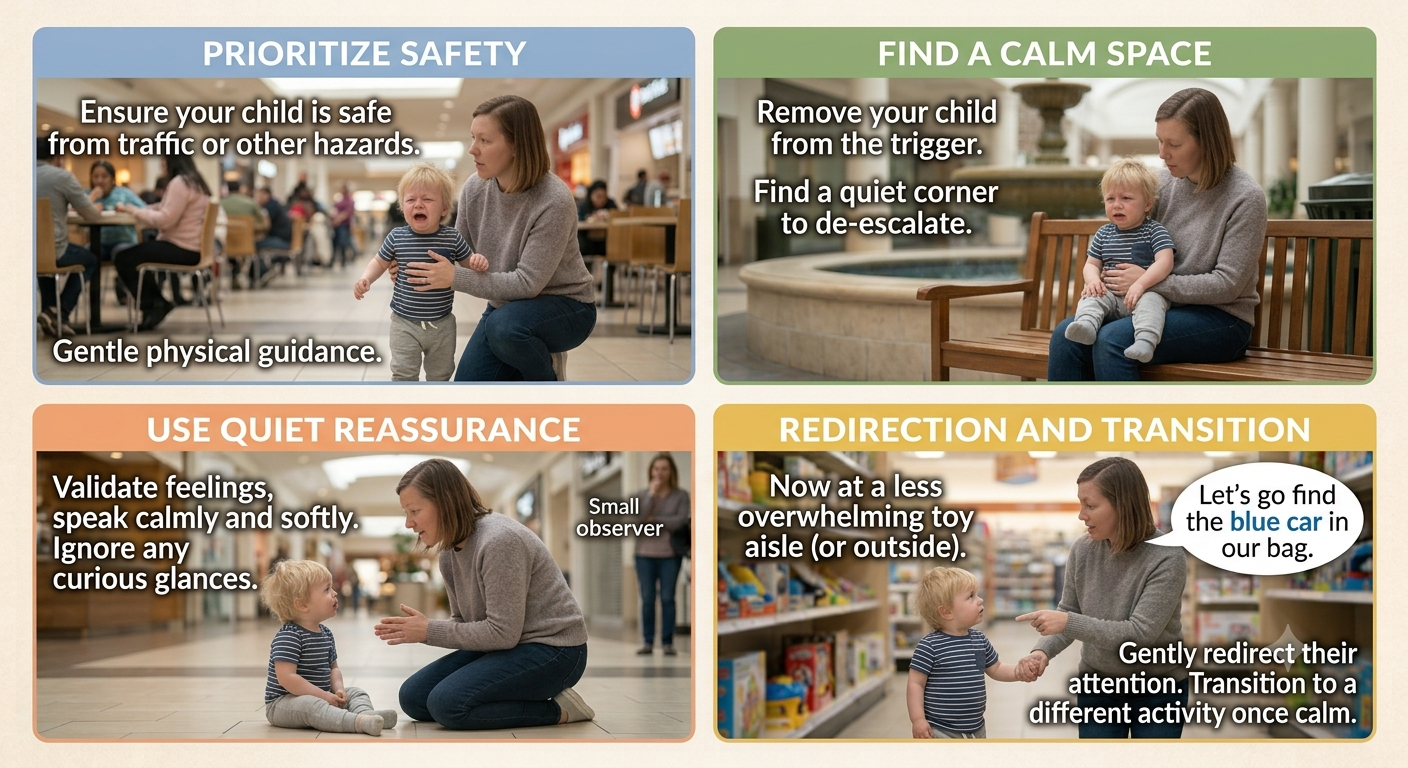
Here is a simple plan for stores, restaurants and playgrounds:
- Stay calm and focus on your child, not on the crowd. Your toddler’s needs matter more than a stranger’s opinion.
- Move to a quieter spot. The car, a bench outside or a quiet aisle gives your child less to react to.
- Use the same steps as at home. Keep the same simple script: safety, calm, name the feeling, hold the limit.
- Be willing to leave. If the tantrum will not settle, it is okay to leave your cart and go. This is not failure. You are protecting your child’s nervous system and yours.
- Plan ahead. Pack snacks, water and a small favorite toy. Avoid shopping at nap time or right before dinner.
If it helps, give your toddler a small job before you go in, like “You’re my helper. You hold the list.” Giving a toddler a purpose often reduces power struggles.
How to Handle Toddler Tantrums at Every Age
Tantrums look different as your child grows, so the best response changes a bit too. If you are not sure where your child fits, use our free Baby Age Calculator to check their exact age and match it to the stage below.
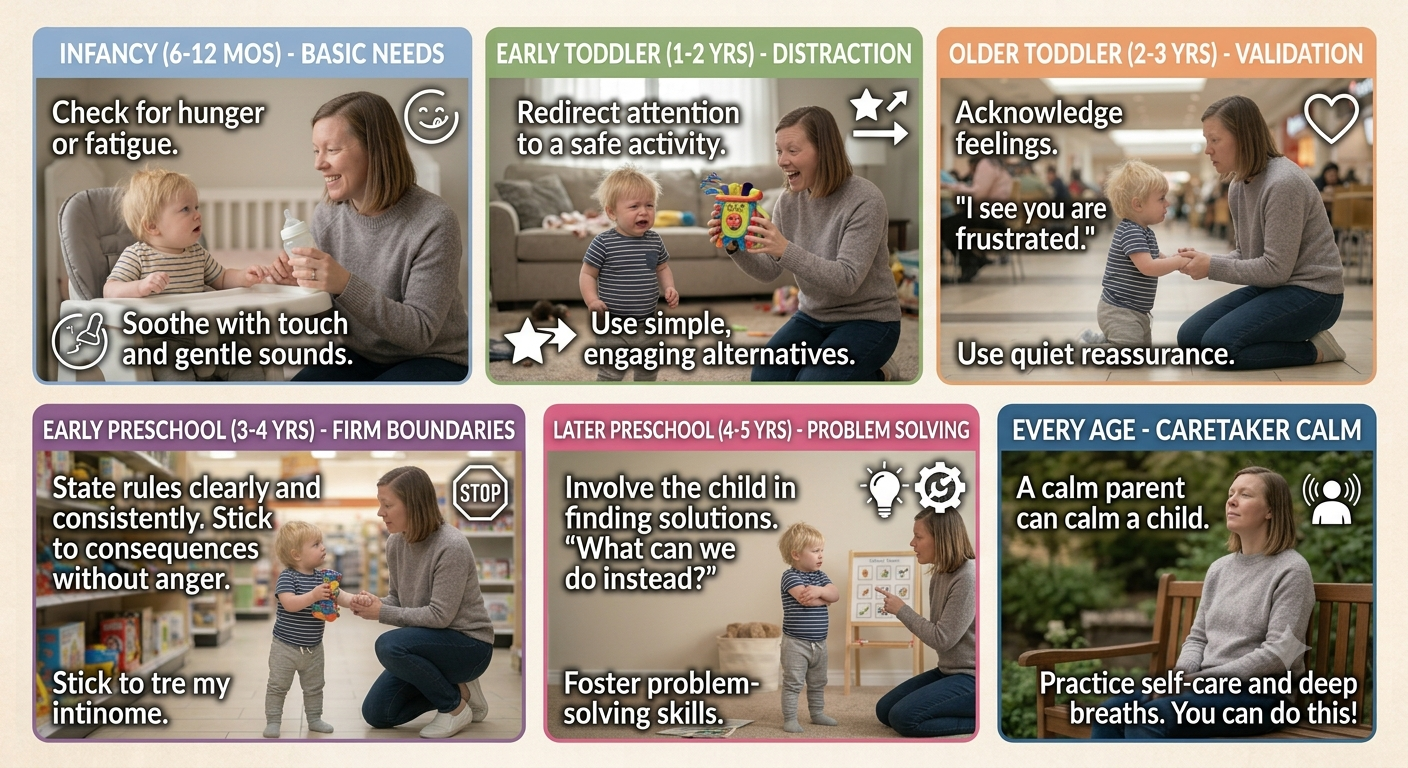
12 to 18 months: At this age, tantrums usually come from frustration and limited words. Stay close, offer simple comfort and distract with a new activity. Teaching a few baby signs, such as “more,” “all done” and “help,” can cut frustration surprisingly fast.
18 to 24 months: Independence is exploding, and so is the word “no.” Offer simple choices, keep routines predictable and name feelings often. This is the stage when many parents see the first big public meltdowns.
2 to 3 years: Tantrums often peak here. Your child can say more but still cannot manage big emotions. Use warnings before transitions, stay consistent with limits and begin teaching calm-down tools like “smell the flower, blow out the candle” breathing.
3 to 4 years: Language and reasoning improve, so you can talk through feelings after the storm passes. Practice problem-solving together: “What could you do next time when you feel mad?” Role-play with stuffed animals can be a fun way to rehearse.
Common Mistakes That Make Toddler Tantrums Worse
Even parents who know how to handle toddler tantrums slip into these traps. Everyone does. Notice them without guilt, and try small adjustments.
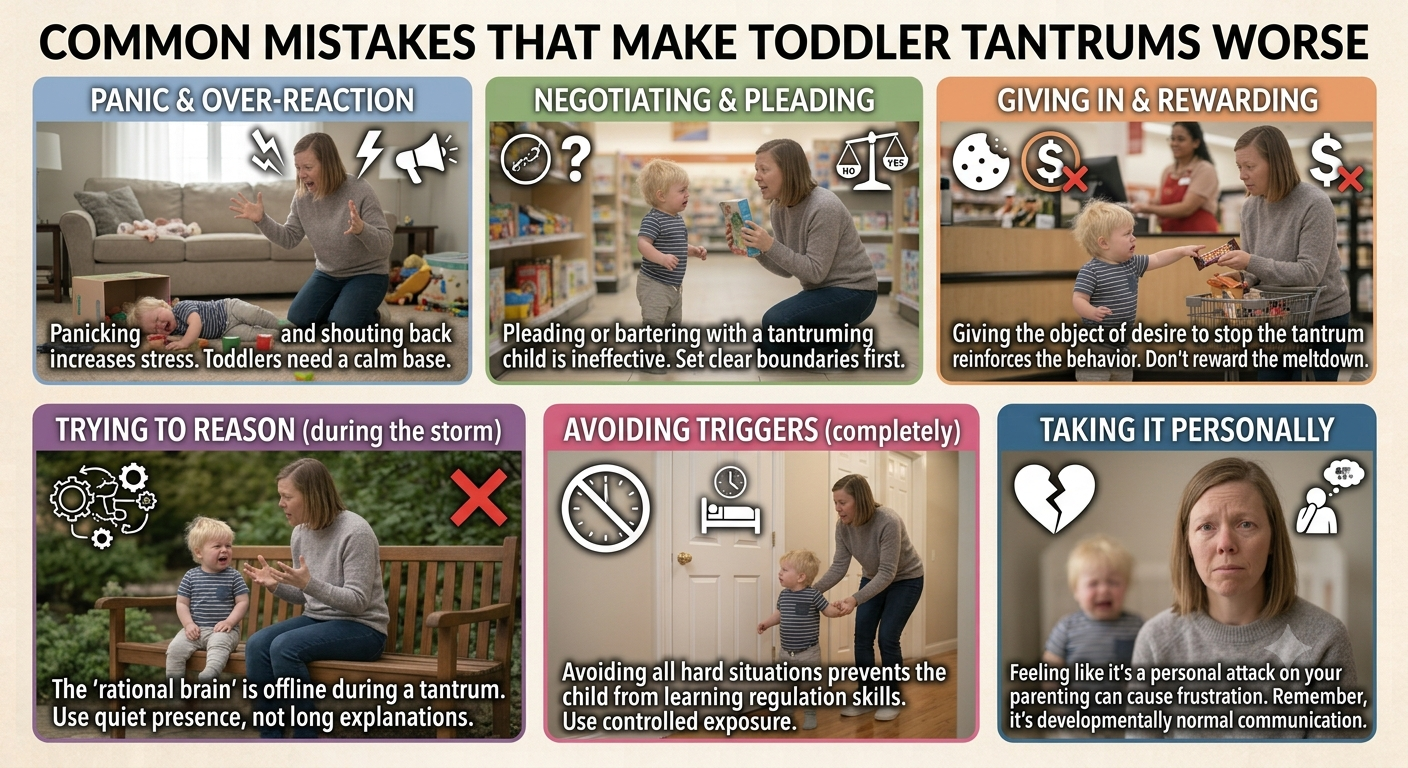
- Reasoning mid-meltdown. A flooded toddler cannot process logic. Save the talk for later.
- Giving in inconsistently. If the answer is sometimes “no” and sometimes “yes after screaming,” tantrums become a gamble that your child keeps playing.
- Yelling or threatening. It raises the emotional temperature and teaches your child to shout when upset.
- Shaming. Phrases like “Big kids don’t cry” teach children to hide feelings, not manage them.
- Over-explaining. Long speeches add noise to an already overloaded brain.
- Bribing in the moment. Offering a treat to stop the crying often rewards the tantrum.
- Skipping the repair. Not reconnecting afterward leaves your child feeling alone with their big emotions.
If you made one of these mistakes today, that is okay. Tomorrow is another chance.
How to Stay Calm When Your Toddler Loses Theirs
Knowing how to handle toddler tantrums is one thing. Doing it while sleep-deprived, late for work and hearing a scream at full volume is another. Your calm is not only about your child. It is also about your own wellbeing.
Use a short mantra. Repeat to yourself, “This is a phase, not a failure,” or “My child is having a hard time, not giving me a hard time.” This shift in thinking can change how your body reacts.
Breathe from your belly. Place a hand on your stomach and take a slow breath in for four counts, then out for six. Slow exhales calm your nervous system within seconds.
Take a micro-break. If your toddler is safe, step a few feet away and take 30 seconds to reset. You are not abandoning your child. You are modeling self-regulation.
Lower your volume on purpose. When you feel like shouting, whisper instead. It surprises your toddler and often lowers the intensity in the room.
Look after your basics. Hunger, poor sleep and constant stress shorten everyone’s patience. These healthy ways to fight the effects of stress on your body can help you recharge, even on busy days.
Ask for backup. Tag in a partner, grandparent or friend when you are running on empty. Asking for help is a strength, not a weakness.
Forgive yourself quickly. Everyone loses their cool sometimes. If it happens, apologize simply: “I’m sorry I yelled. I was frustrated, but I shouldn’t have shouted. I love you.” This teaches your child how to repair a mistake, which is one of the most valuable life skills they can learn.
You are not the only parent who feels this way. Reading other moms’ honest experiences, like the ones in our post on real moms, real days and real wins, can remind you that nobody parents perfectly.
When Toddler Tantrums Are a Sign to Call the Pediatrician
Most tantrums are typical for the age. Still, trust your instincts. Talk to your child’s doctor if you notice any of these:
- Your child often hurts themselves or others during tantrums.
- Meltdowns are extremely long, intense or happen many times every day.
- Tantrums stay intense well past ages four or five.
- Your child holds their breath until they faint or seem to lose control.
- Outbursts come with delays in speech, play, eye contact or social skills.
- Your child seems to lose skills they once had.
- You feel constantly overwhelmed or unsafe.
If you are worried about development more broadly, our guide to early signs of autism in babies explains what parents often notice first. Reading it does not replace a professional evaluation, so bring any concerns to your pediatrician.
For most families, the advice on how to handle toddler tantrums in this guide is all you need. But asking for help early is never an overreaction. This article is general information and is not a substitute for medical advice.
Frequently Asked Questions
How long do toddler tantrums usually last?
Most last between one and five minutes, though they can feel much longer. Frequency and intensity typically drop as your child’s language and self-control grow.
Is there one best method for how to handle toddler tantrums?
No single method works for every child. Staying calm, keeping children safe, validating feelings and holding consistent limits work for most families. Beyond that, test different approaches and notice what helps your own toddler settle.
Should I give my toddler a time-out during a tantrum?
Some families find a short, calm break helpful, especially if it is framed as a chance to reset and not as a punishment. Others prefer staying close and offering comfort. Either way, the goal is to help your child calm down, not to make them feel rejected.
Why does my toddler have tantrums more often with me than with others?
That is actually a compliment. Children often save their biggest feelings for the person they feel safest with. They hold it together elsewhere and let it out at home.
What is the best way to deal with toddler tantrums at bedtime?
Keep a predictable routine, dim the lights early and offer a calm, connecting activity like a story or a cuddle. Bedtime meltdowns usually come from tiredness, so an earlier or more consistent bedtime often helps.
Can toddler tantrums be prevented completely?
No, and they should not be. Tantrums are a healthy part of learning to handle emotions. You can reduce them with routines, choices and plenty of connection, but you cannot eliminate them.
Final Thoughts on How to Handle Toddler Tantrums
Toddler tantrums can be loud, embarrassing and exhausting, but they are also temporary. Behind every meltdown is a small person learning to manage feelings far bigger than their body can hold. Your job is not to stop the storm. Your job is to be the calm harbor they can return to.
Learning how to handle toddler tantrums takes practice, patience and a lot of self-compassion. Stay calm when you can, repair when you cannot, and remember that every difficult moment is building your child’s emotional strength. If you ever need a reminder that you are not alone, you will find encouragement across our Parents section and in our complete guide to real motherhood at every stage.
You are doing better than you think. One calm breath at a time.