


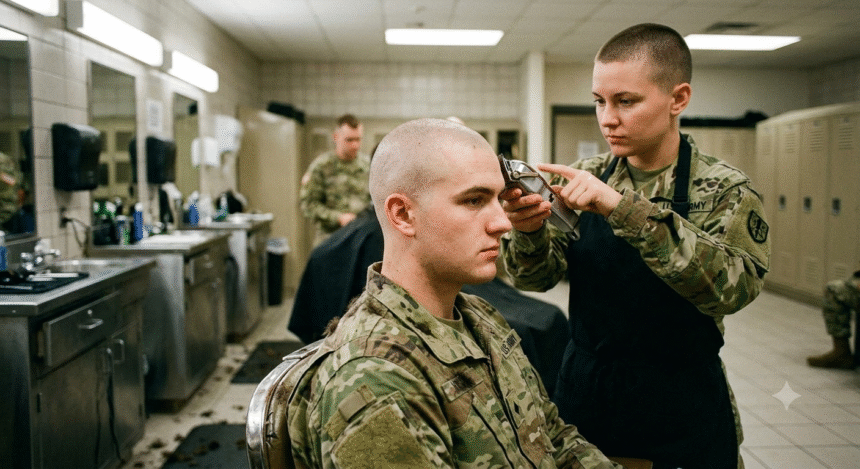
There’s a reason the military haircut has outlasted every passing trend in men’s grooming. It isn’t chasing a look — it’s solving a problem. Short sides, a clean neckline, and a top that needs almost no attention in the morning. That combination has made it the default choice for soldiers for generations, and it’s exactly why civilians keep walking into barbershops asking for the same thing.
This guide breaks down 40 of the sharpest military-inspired cuts, how to figure out which one actually suits your face and hair, how to talk to your barber so you get it right the first time, and how to keep it looking freshly cut for weeks at a stretch.
What Actually Makes a Haircut “Military”
A military haircut isn’t one specific style — it’s a family of cuts built around the same three rules: short on the sides, minimal length on top, and nothing that requires product, a mirror, or ten extra minutes before you leave the house.
The look was never designed with fashion in mind. It came out of basic training standards meant to keep hair off the collar, out of the eyes, and easy to inspect. What’s interesting is that the same practicality that made it a service requirement is exactly what makes it appealing to guys who have nothing to do with the military — it’s a haircut you can genuinely forget about.
Every variation below sits somewhere on a spectrum between two extremes: the induction cut (almost no hair at all) and looser, styled versions like the regulation cut or side part (short, but with enough length on top to actually do something with it).
40 Military Haircuts Worth Considering
1. Induction Cut
Buzzed down to the scalp with a #0 or #1 guard, this is the cut basic training made famous. There’s no shape to maintain and nothing to style — it’s the most direct expression of the “wash and go” philosophy.
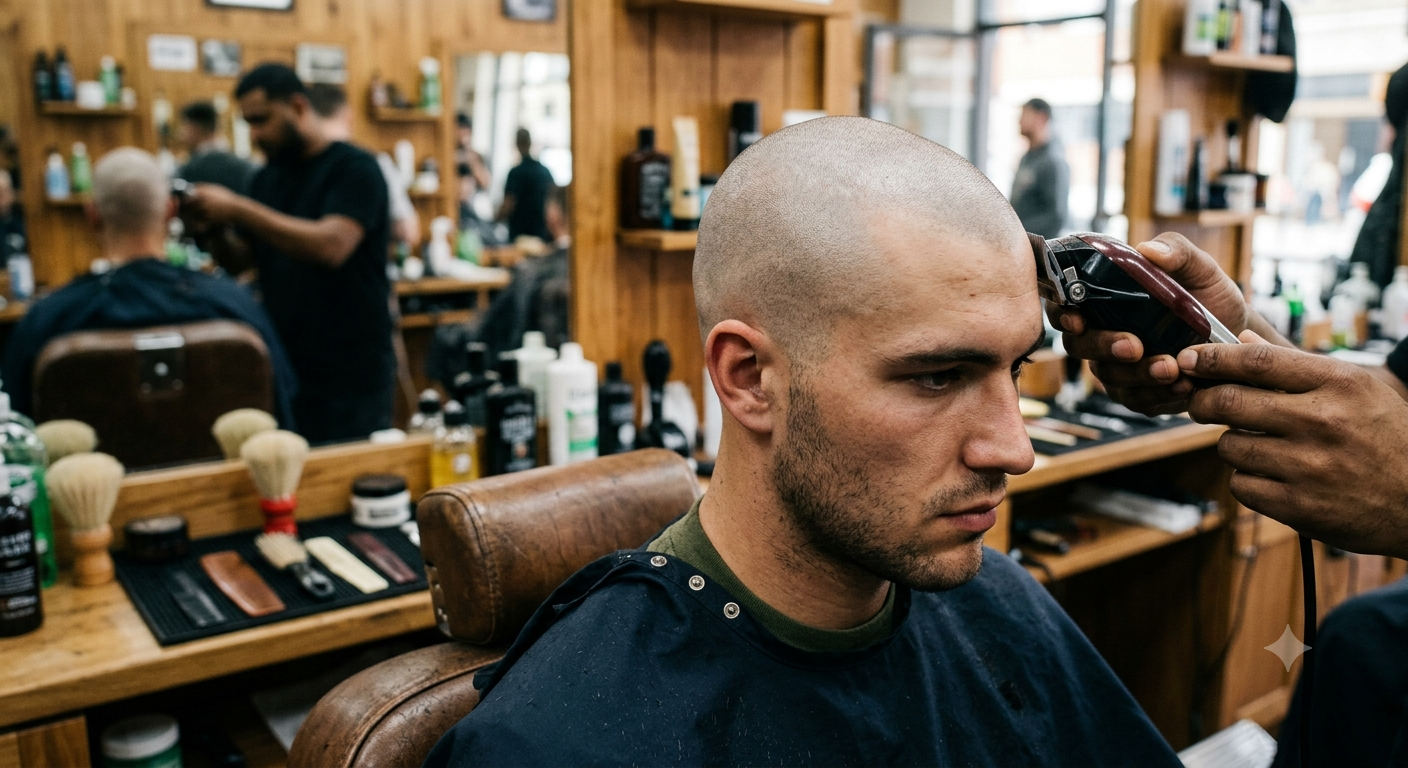
Best for: Guys who want zero morning routine and don’t mind showing off their head shape.
2. Burr Cut
One notch longer than an induction cut, leaving just enough stubble to soften the scalp without losing the low-maintenance appeal.
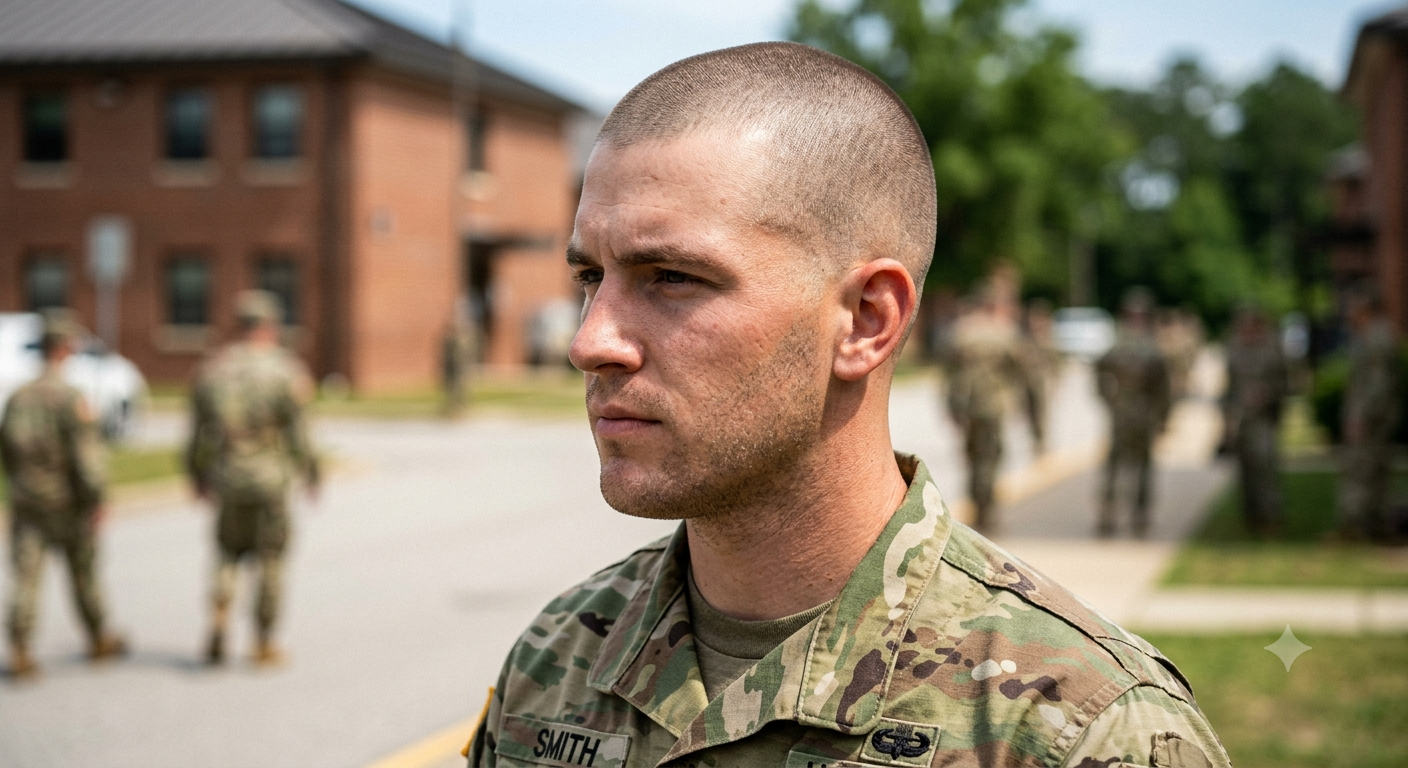
Best for: First-timers easing into a very short cut.
3. Buzz Cut
Even length across the entire head using a single guard length, usually between a #2 and #4. It’s the most universally flattering cut on this list because it works with almost any hair texture.

Best for: Nearly everyone — round, square, or oval face shapes.
4. High and Tight
Shaved sides and back that fade sharply into a short top, creating a hard, visible contrast line. This is the cut most associated with Marines specifically.
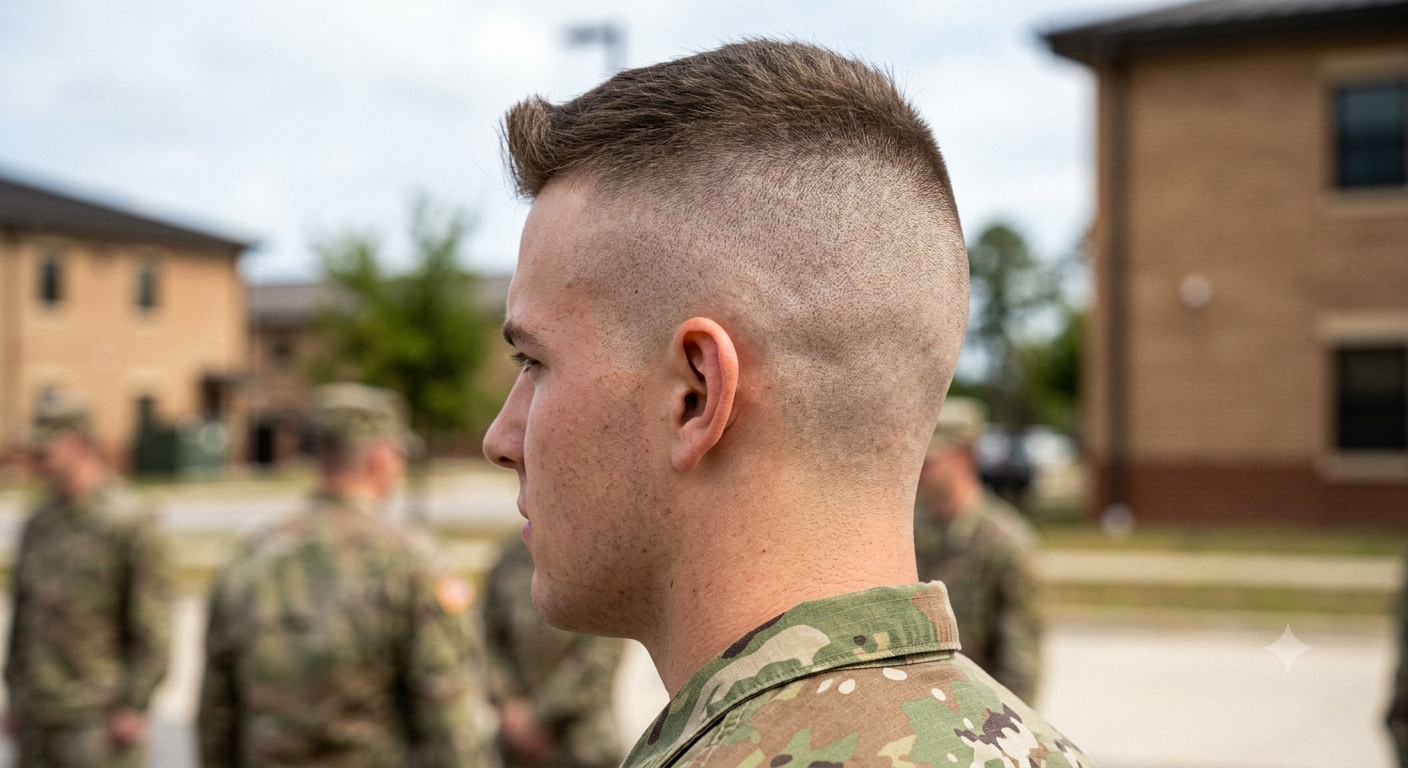
Best for: Men who want maximum contrast and minimal styling.
5. Crew Cut
Short sides with a slightly longer top, usually tapered rather than shaved to skin. It reads as more “office” than “barracks” while keeping the same low-maintenance bones.
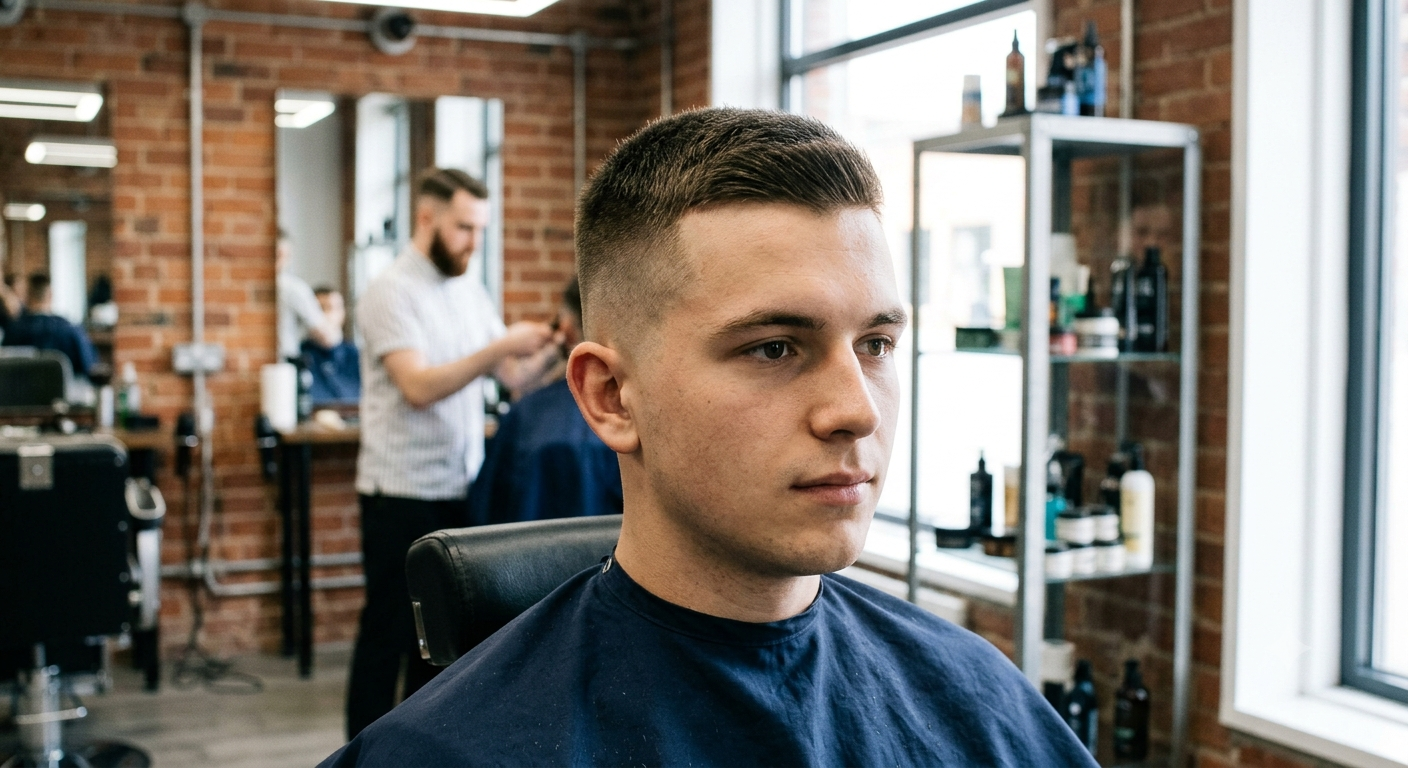
Best for: Professional settings where a buzz cut might feel too severe.
6. Flat Top
The sides are faded or shaved close while the top is cut level and squared off using a flat-top comb. It takes a skilled barber to get the geometry right.
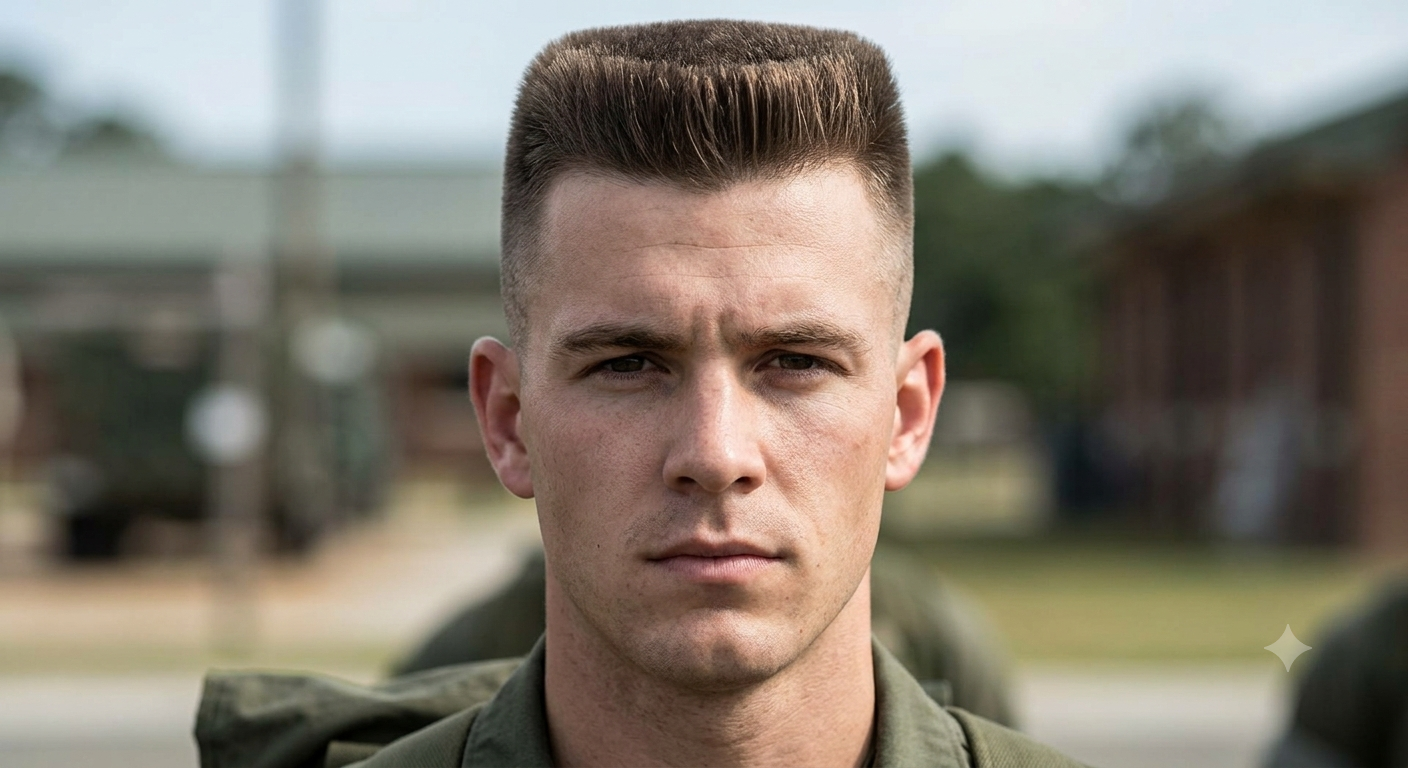
Best for: Thicker hair types that can hold a flat shape.
7. Regulation Cut
A longer, more polished take that allows for a defined side part and gradual tapering — closer to a business cut with military bones.
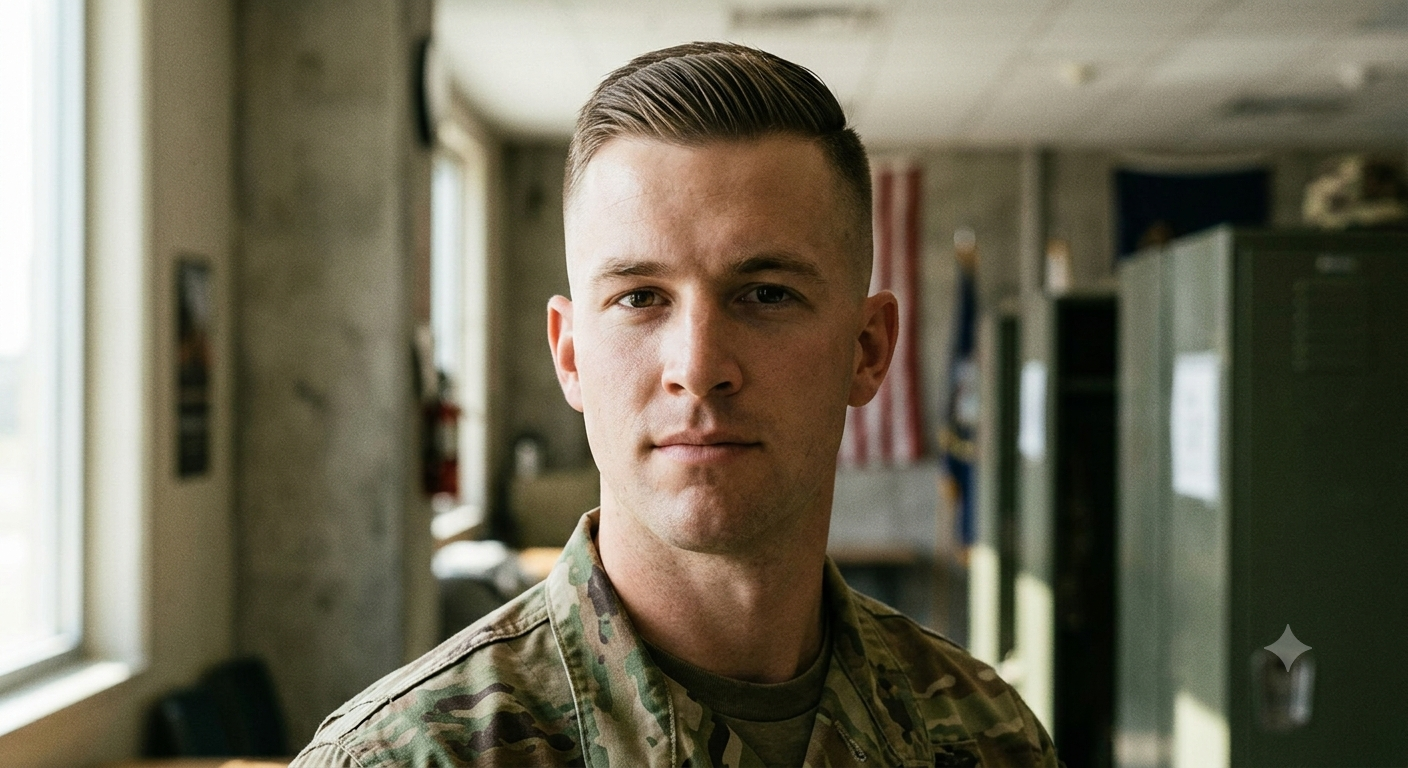
Best for: Men who want the discipline of the style without looking like they just left boot camp.
8. Recon Cut
A more extreme version of the high and tight, with the crown cut noticeably shorter and the sides taken almost to skin.
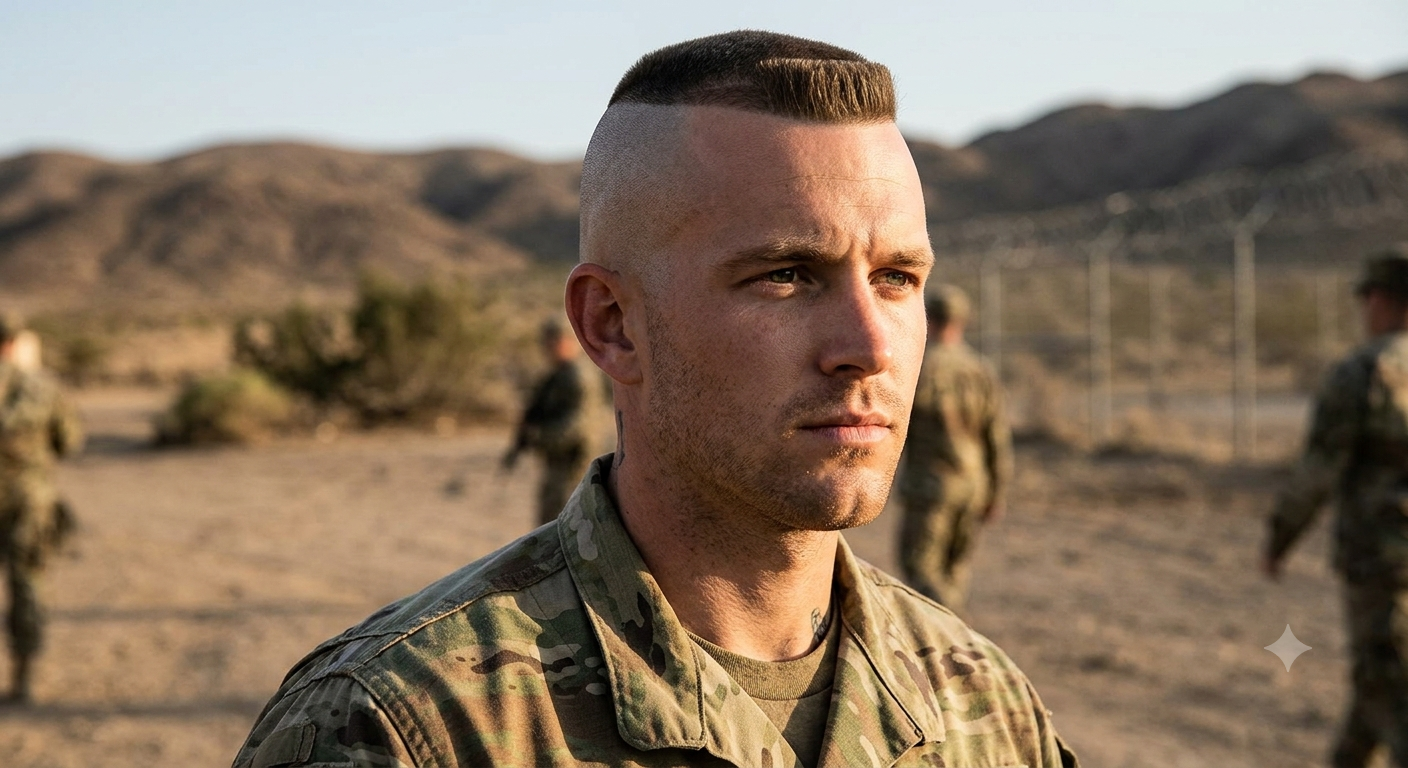
Best for: A tougher, more angular look than a standard high and tight.
9. Ivy League
Tapered sides paired with enough length on top to comb or brush into a soft side part. It bridges military tidiness with an Ivy-campus polish.
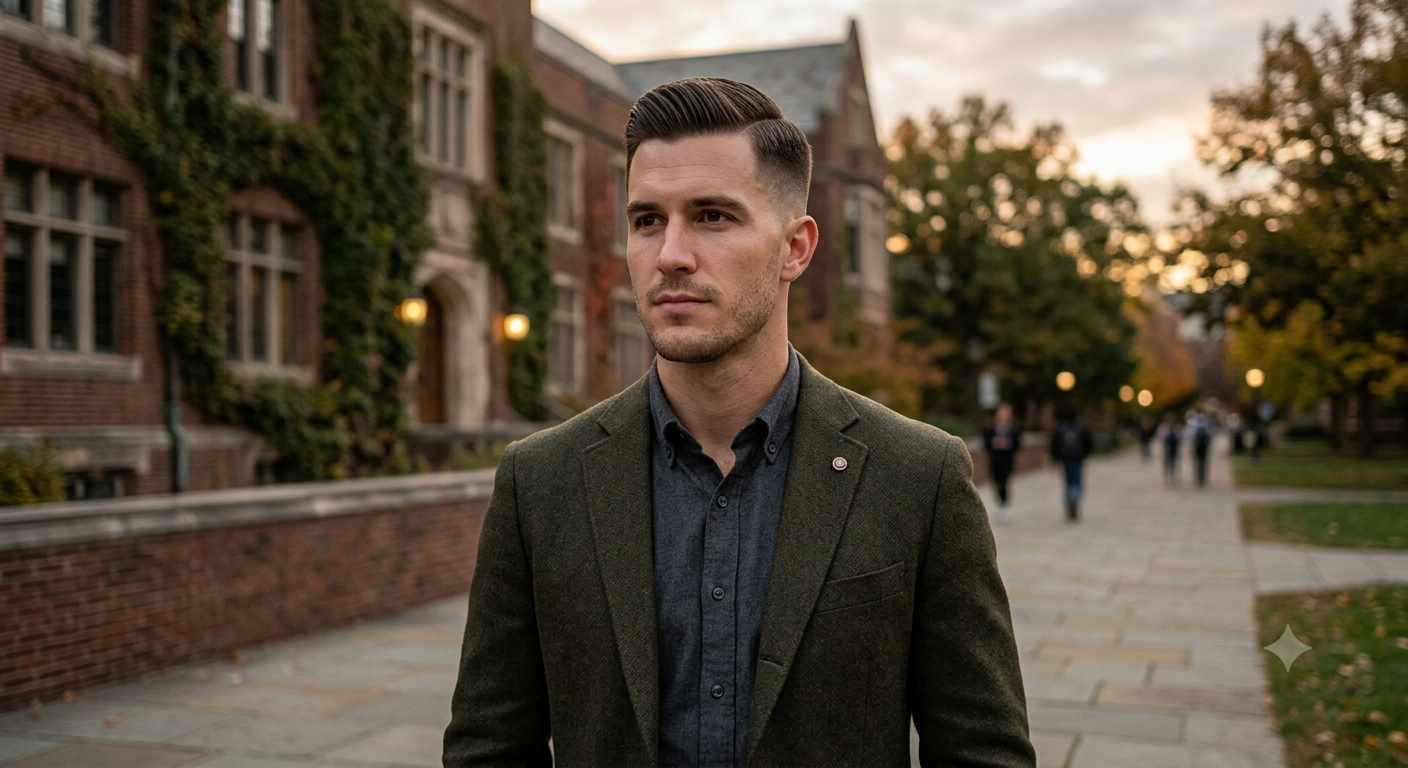
Best for: Guys who want structure during the week and a bit of flexibility on weekends.
10. Butch Cut
Uniform length all over, slightly longer than a buzz cut, letting natural texture show through instead of a completely smooth finish.
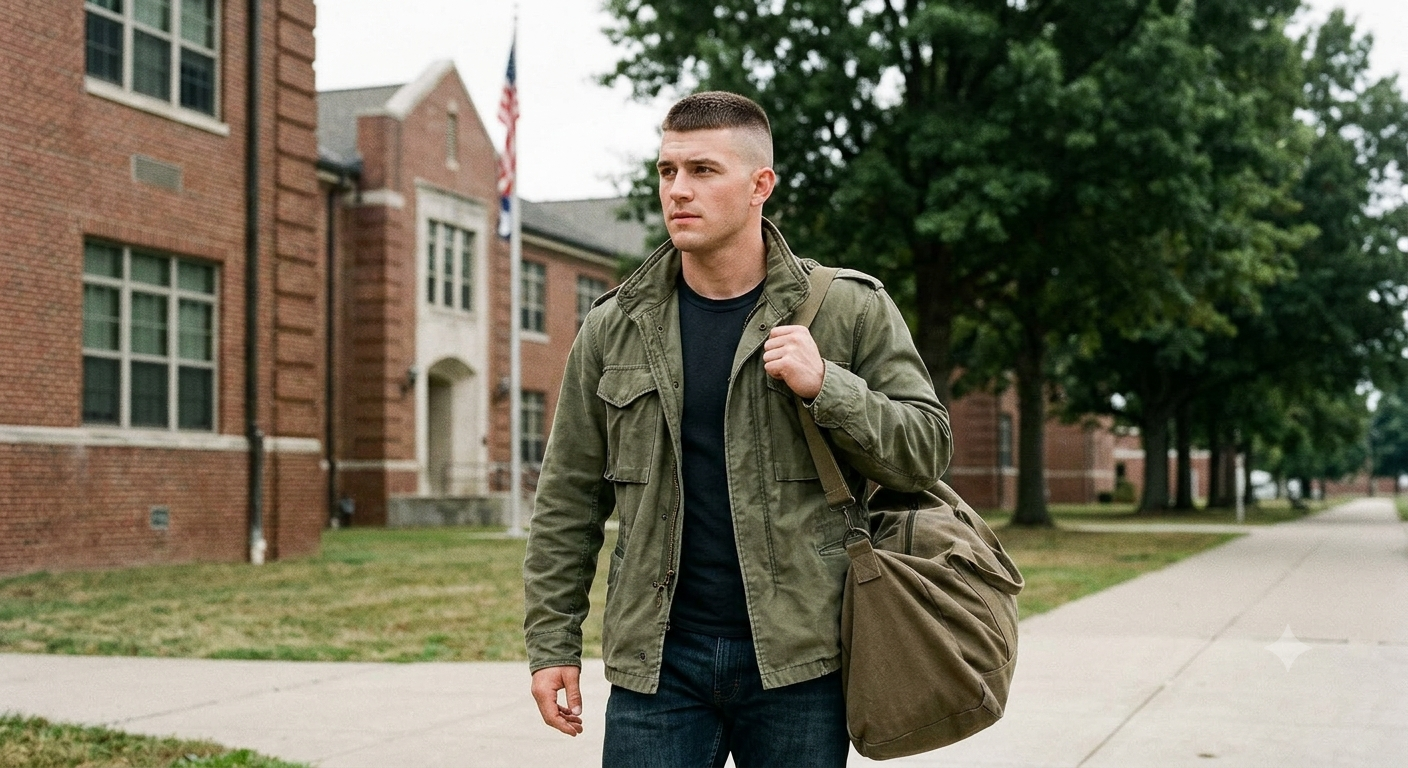
Best for: Fine or straight hair that looks patchy when buzzed too short.
11. Low Fade Military Cut
A gentle fade beginning just above the ears and blending into a short top — subtle enough to work in conservative office environments.
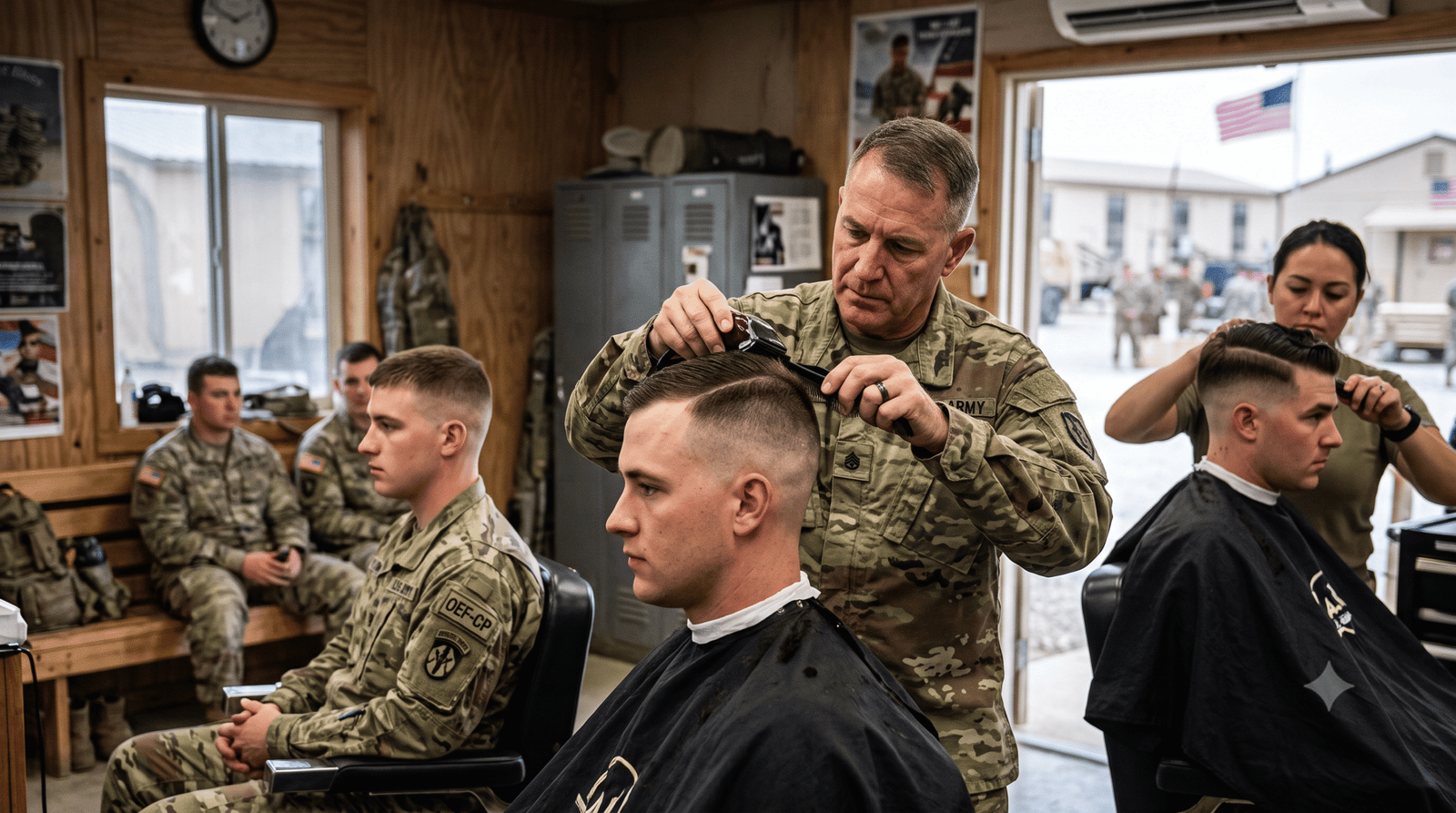
Best for: Anyone who wants a fade without much contrast.
12. Mid Fade with Textured Top
The fade starts around the temple, meeting a slightly textured, brushed-up top for a bit of dimension.
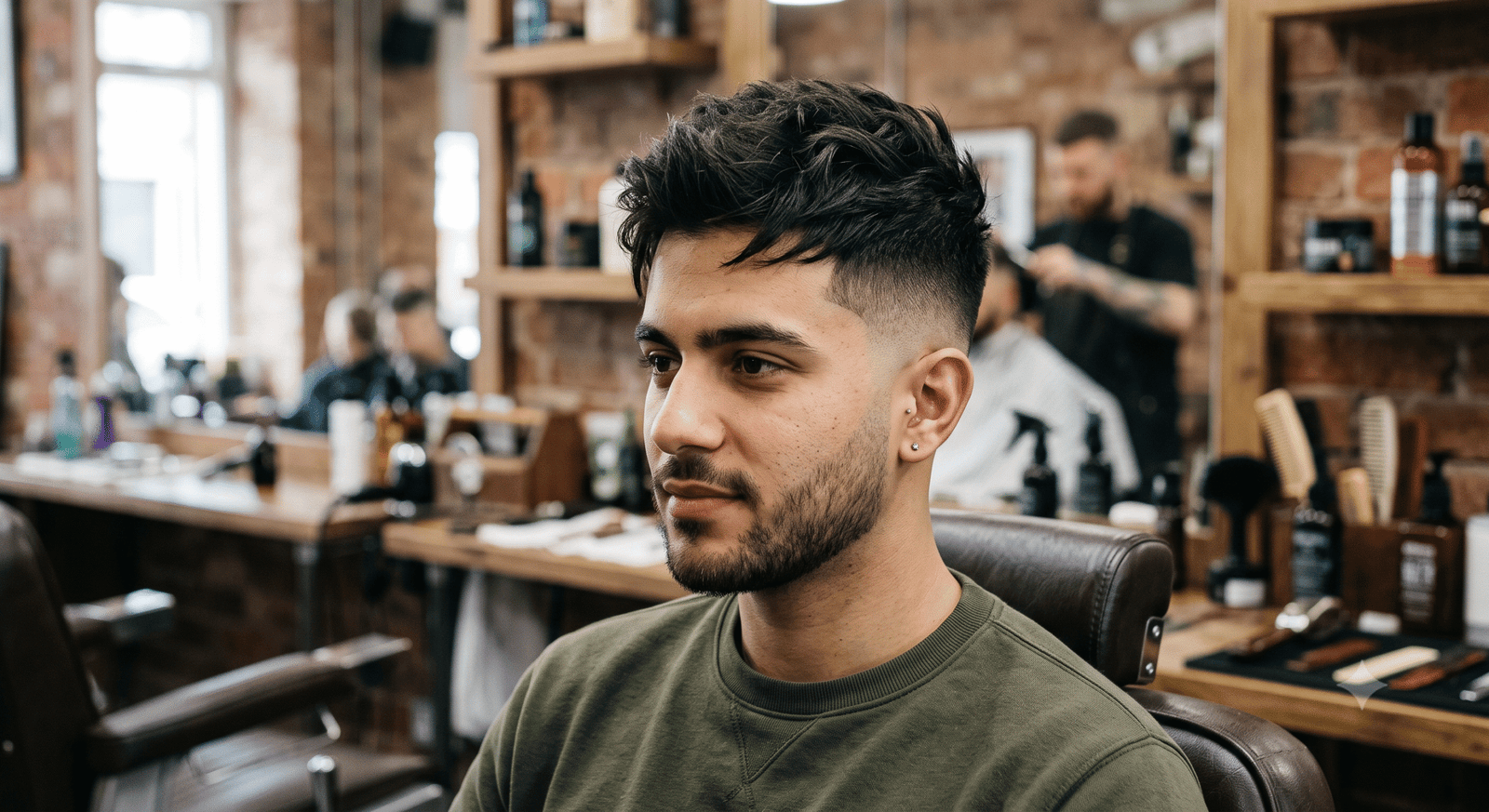
Best for: A cut that still photographs well from every angle.
13. Skin Fade Military Cut
Sides shaved down to bare skin, fading into a short top for the sharpest possible contrast this list offers.
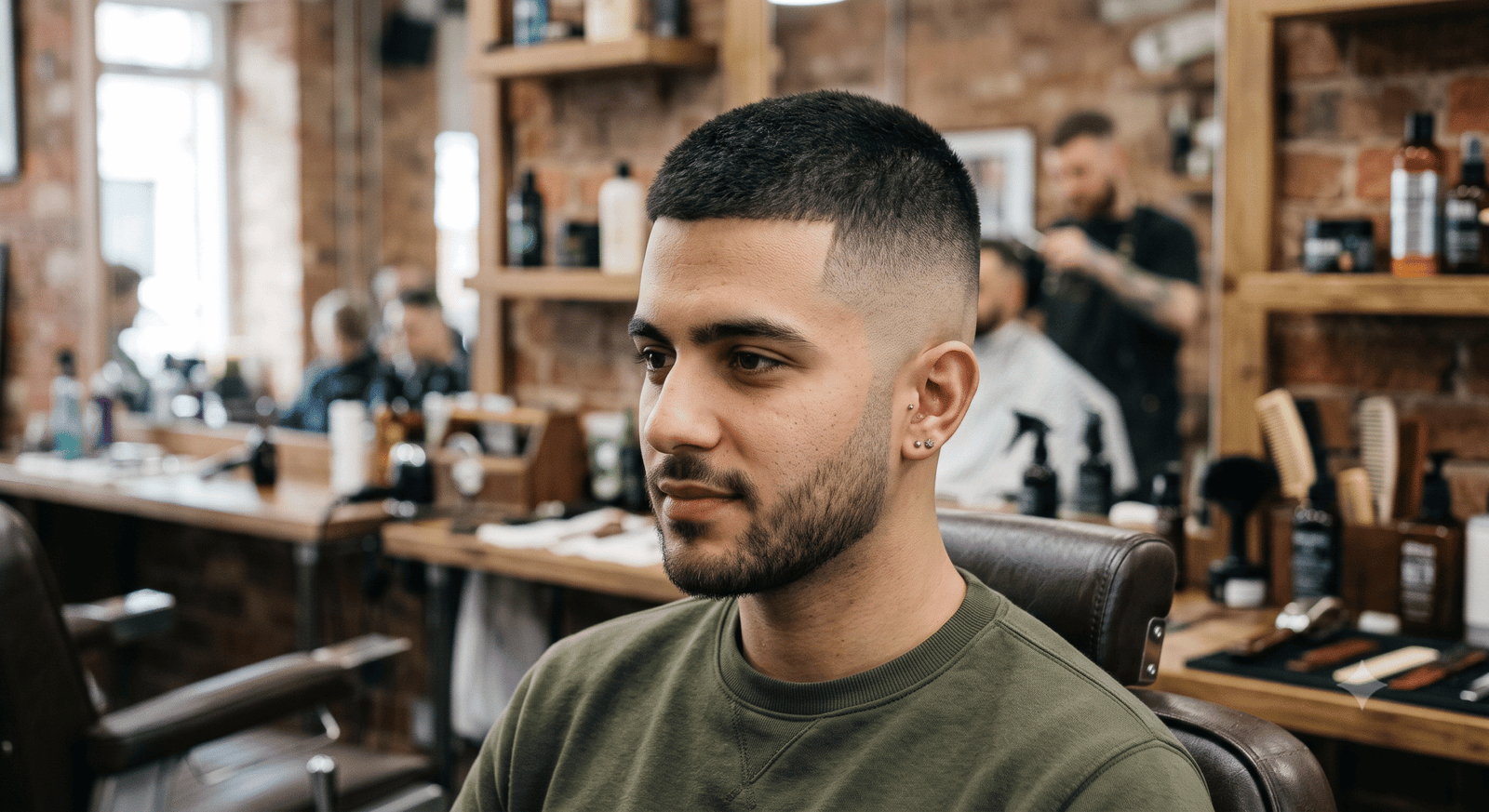
Best for: Men who want their cut to look freshly done even a week later.
14. High Fade Buzz Cut
Combines a buzzed top with a fade that climbs higher up the head than a standard buzz, adding shape without adding maintenance.
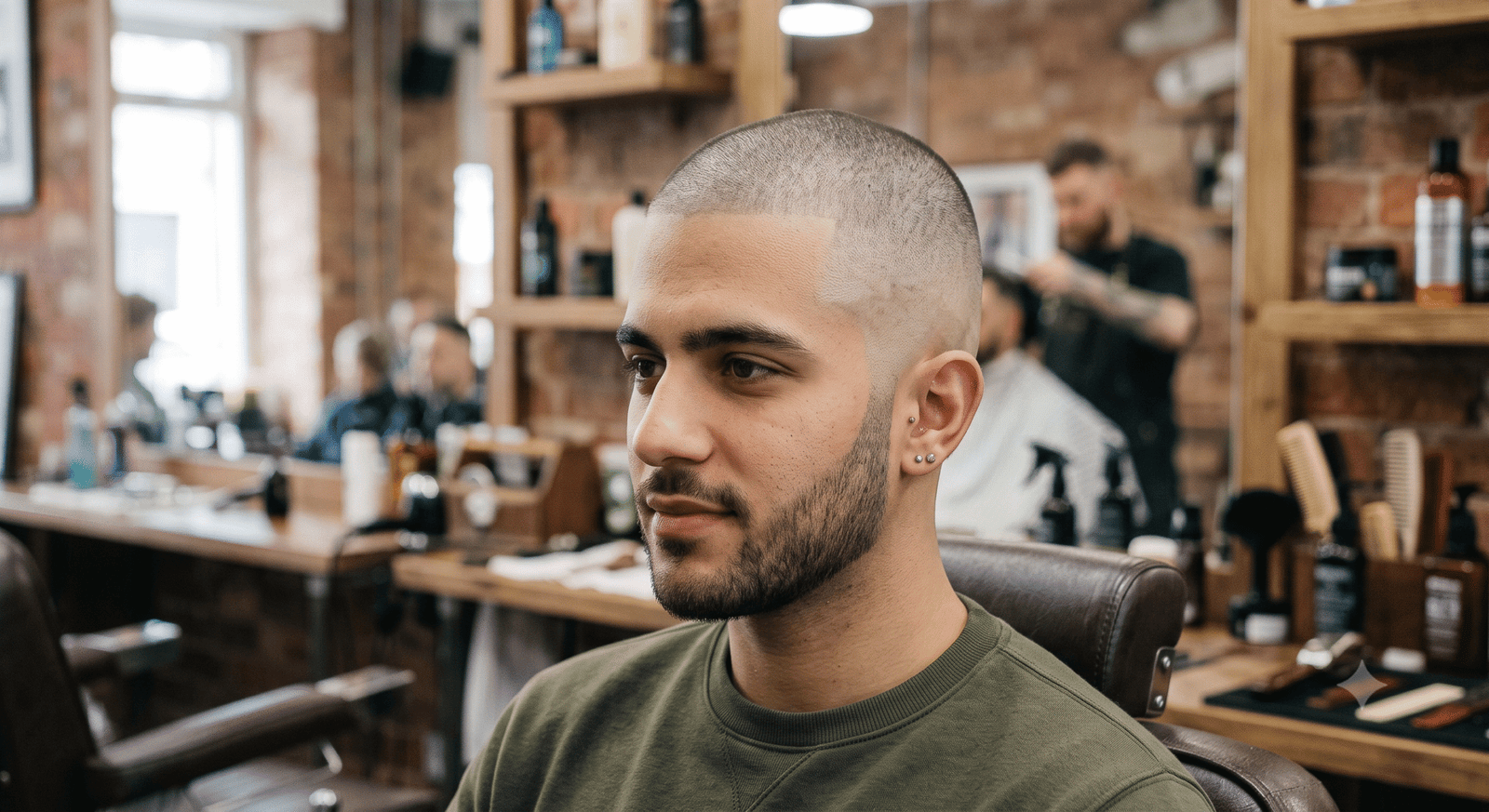
Best for: A buzz cut that reads a little more intentional.
15. Textured Crop Fade
Short, textured hair on top meets a tight fade on the sides — a softer, more modern read on the classic military base.
Best for: Guys who want something that doesn’t look strictly “military.”
16. Disconnected Fade
A visible break separates the top from the faded sides instead of a gradual blend, creating a bolder, more graphic look.
Best for: Thicker hair that can support a clear line of separation.
17. Spiky Top Fade
Short spikes on top, tight sides underneath — one of the few cuts on this list that leans slightly youthful.
Best for: Younger guys who still want a low-effort cut.
18. Short Pompadour
Short sides with a small lift built into the front of the top, giving a bit of vintage shape without extra length.
Best for: Men who want a hint of style without daily blow-drying.
19. Brushed-Back Fade
Faded sides paired with a top brushed straight back — clean, but with a touch more polish than a plain crew cut.
Best for: A cut that transitions easily from gym to office.
20. Faux Hawk
Faded sides with a slightly raised strip running down the center, a controlled nod to the mohawk shape.
Best for: Guys who want personality without going against the “clean” military baseline.
21. Marine-Style High and Tight
The most extreme version of the high and tight, with sides taken all the way to skin and only a narrow patch of length left on top.
Best for: Anyone who wants the cut most closely tied to Marine Corps tradition.
22. Air Force Taper
A gentler taper on the sides than a Marine cut, with slightly more length allowed on top for a softer overall shape.
Best for: A relaxed alternative to the high and tight.
23. Navy Regulation Cut
Short sides with a neatly combed top, closer to a traditional side part than a fade.
Best for: Men who want something that looks equally at home in a suit.
24. Brush Cut
Hair kept short but with enough length to stand up slightly, giving a soft, brush-like texture on top.
Best for: A middle ground between a buzz cut and a crew cut.
25. Tapered Top with Fade
A short fade on the sides rising into a slightly longer, shaped top for a bit of lift.
Best for: Everyday wear that still looks deliberate.
26. Classic Short Back and Sides
Tapered sides and a neat top you can comb or leave alone — the most timeless entry on this entire list.
Best for: Guys who want a cut that never looks dated.
27. Ranger Cut
Very short sides with a slightly longer top, built for function first and style second.
Best for: Active lifestyles where a haircut needs to survive sweat and a helmet.
28. Commando Cut
Tight sides with a short, even top — simple, sharp, and easy for a barber to repeat exactly the same way every visit.
Best for: Men who want total consistency between appointments.
29. Temple Fade
A soft fade concentrated around the temple area rather than the whole side, keeping most of the head at a uniform length. Best for: A subtle way to add detail to a plain buzz cut.
30. Cropped Fringe Cut
Short and textured through the top with a neat, straight fringe across the forehead — sometimes called a military crop. Best for: Thick, straight hair that holds a defined fringe shape.
31. Quiffed Buzz Fade
A short buzz on top styled into a slight quiff, paired with faded sides for contrast. Best for: A cut with just enough shape to style in under a minute.
32. Textured Side Sweep
Short sides paired with slightly longer, textured hair brushed to one side. Best for: A more relaxed, off-duty variation on the military base.
33. Disconnected Undercut
Longer hair on top separated sharply from faded sides, creating one of the boldest silhouettes on the list. Best for: Guys who want a strong, modern statement.
34. Curly Fade
A fade on the sides that lets natural curl pattern stay intact and visible on top. Best for: Curly or coily hair types that don’t respond well to a full buzz.
35. Low Tapered Fade
A gradual taper that stays low on the head, blending into a short, lightly textured top. Best for: A softer entry point into fade styles.
36. Caesar-Style Military Crop
Even length on top with a straight fringe, paired with a clean fade — a low-maintenance hybrid between a Caesar cut and a military crop. Best for: Men who want texture up top without any real styling effort.
37. Hard Part Military Cut
A razor-shaved line separating a combed-over top from faded sides, giving a sharp, tailored finish. Best for: Formal settings where precision matters.
38. Slicked-Back Military Fade
Faded sides with a longer top brushed straight back and held in place with a light pomade. Best for: A cut that moves easily between casual and dressed-up.
39. 1940s-Style Side Part
A nod to wartime-era grooming — short sides with a defined side part and a slicked, polished top. Best for: Retro-leaning guys who still want practicality underneath the style.
40. Korean-Style Military Cut
Short sides with a slightly longer, naturally textured top that keeps some movement instead of a hard shape. Best for: A softer, more youthful take on the military template.
Matching the Cut to Your Face and Hair
Not every military cut works the same way on every head. Before you commit, it helps to know which direction plays to your strengths.
| Face Shape / Hair Type | Cuts to Try | Why It Works |
|---|---|---|
| Round face | High and tight, flat top | Adds visual height and sharper edges |
| Square face | Buzz cut, crew cut | Plays into a strong jawline instead of fighting it |
| Oval face | Regulation cut, low or mid fade | Most fades and tapers suit an oval shape by default |
| Thick or coarse hair | High fade, textured crop | Fading the sides keeps volume from looking bulky |
| Fine or thin hair | Buzz cut, butch cut | Uniform length reads fuller than a heavily layered cut |
| Curly or coily hair | Curly fade, burr cut | Keeps curl pattern intact while controlling length |
| Want zero styling | Induction cut, burr cut | Nothing to comb, brush, or apply product to |
| Want a bit of style | Side part, short pompadour | Enough length on top to actually shape it |
How to Ask Your Barber for the Right Cut
Walking in and saying “give me a military cut” leaves too much open to interpretation — the phrase covers everything from a shaved scalp to a side-parted regulation cut. A better approach:
- Name the guard number. Say “a #2 on the sides fading into a #4 on top” instead of just “short.” Barbers think in clipper numbers, not adjectives.
- Specify where the fade starts. Low, mid, or high changes the whole look, and it’s the detail most often lost in translation.
- Bring a reference photo. Even a rough match helps your barber see exactly how much contrast and length you’re picturing.
- Say how much time you’ll actually spend styling it. A barber will shape the top differently for a guy who wants to towel-dry and leave versus one who’s happy to use pomade every morning.
Styling a Military Haircut in Three Steps
Most of these cuts take under two minutes to style, which is the entire point.
- Start with clean, towel-dried hair. Product goes on much more evenly when hair is slightly damp rather than soaking wet or bone dry.
- Use a light product for texture, not shine. A matte clay or light paste is enough for anything shorter than an inch — heavier pomades are really only useful on longer top sections like a side part or pompadour.
- Comb or finger-style in the direction you want, then stop. Overworking short hair usually makes it look greasy rather than sharper.
Keeping It Looking Freshly Cut
A military haircut grows out faster than it looks, mostly because the contrast between the sides and top is what makes it sharp in the first place.
- Book a trim every 2 to 3 weeks. Fades in particular lose their edge quickly as the sides grow in.
- Keep clippers and combs clean if you touch up at home. Buildup on tools dulls the line between lengths.
- Moisturize the scalp. Short cuts expose more skin, and dry scalp shows up fast under close-cropped hair.
- Wear sunscreen or a hat outdoors. A buzzed scalp burns just as easily as any other exposed skin.
Frequently Asked Questions
What’s the difference between a high and tight and a crew cut? A high and tight shaves the sides all the way to skin with a hard contrast line, while a crew cut uses a gradual taper and generally leaves a bit more length on top.
Do military haircuts work for curly hair? Yes. Cutting curly hair shorter reduces frizz and keeps the curl pattern more defined — a curly fade or burr cut are usually the easiest starting points.
How short is a #1 versus a #2 guard? A #1 leaves about 1/8 inch of hair, while a #2 leaves roughly 1/4 inch — enough of a difference that it changes how “shaved” the sides look.
Is a military cut a good option for a receding hairline? Often, yes. Shorter, even lengths reduce the contrast between thinning areas and the rest of the hair, which is why induction and buzz cuts are common choices for early hair loss.
How often do these cuts actually need a trim? Every 2 to 3 weeks for anything with a fade. Cuts with more uniform length, like a butch or burr cut, can sometimes stretch to 4 weeks before looking noticeably grown out.
Can I get a military haircut without going as short as a buzz cut? Yes — the regulation cut, Ivy League, and side part all keep the short-sides structure while leaving enough length on top to comb or part.
What face shape suits a military haircut best? Square and oval faces adapt to almost any version, while round faces generally look sharper with a bit of added height, like a flat top or high and tight.
Final Thoughts
The appeal of a military haircut has never really been about looking tough — it’s about looking put-together without spending any time on it. Whether you land on something as stripped-down as an induction cut or as styled as a regulation cut with a side part, the underlying logic is the same: short, clean, and easy to repeat every few weeks.
Bring one of these names — or a photo — to your next barber appointment, and you’ll walk out with a cut that looks intentional from every angle.